Hardware

For a while now, I’ve been nurturing a growing obsession with hardware: door knobs, hinges, door bells – even toilet paper holders: tangible and tarnished little objects that provide solace amidst the chaos of a hole-house restoration. (Fun fact: our house doesn’t have toilet paper holders in any of the 3 bathrooms). While it may seem absurd to spend time picking out doorknobs when the doors still need to be stripped, sanded and re-finished, I’m of the opinion that the right type of period appropriate (i.e. old and crusty) can provide a faint twinkle at the end of the tunnel of restoration madness.

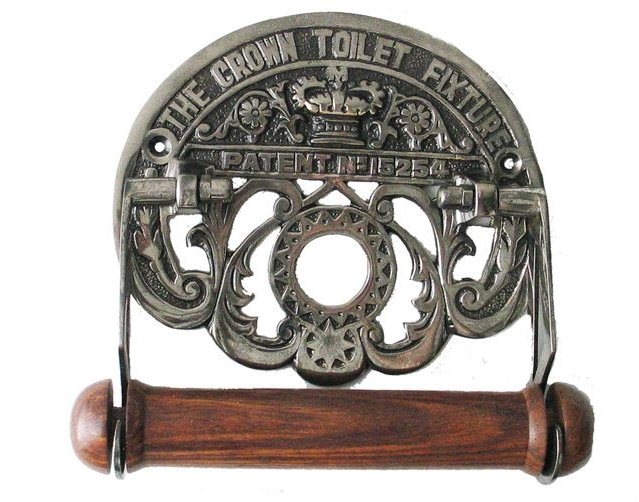
Toilet Paper holder

I can absolutely see this toilet paper holder in our parlor bathroom (fun fact, the parlor bathroom is currently a storage closet, and best case scenario, we are at least a year away from making it functional – but no matter: this lovely thing will hold roll upon roll of the fanciest Target brand tissue, when the time comes).

The way I look at it, even the most meticulous restoration job can be ruined with the wrong hardware. It’s like wearing the wrong kind of shoes with an otherwise perfect outfit: why bother leaving the house at all (says the girl who only wears DocMartens, but you get my point).

We’ve been slowly collecting bits and pieces of hardware, and I’m quite proud of the restraint I’ve shown during our last salvage excursions. A wish list is here, and so onward we go.

(a few more items of inspiration for when the time comes: bathroom, kitchen and paint colors).


Boiling Hardware

Our world is covered in (undesirable) paint: woodwork, walls and hardware. Sometimes it seems that all we do is remove paint –  and yet, we haven’t made a dent!

IMG_9833

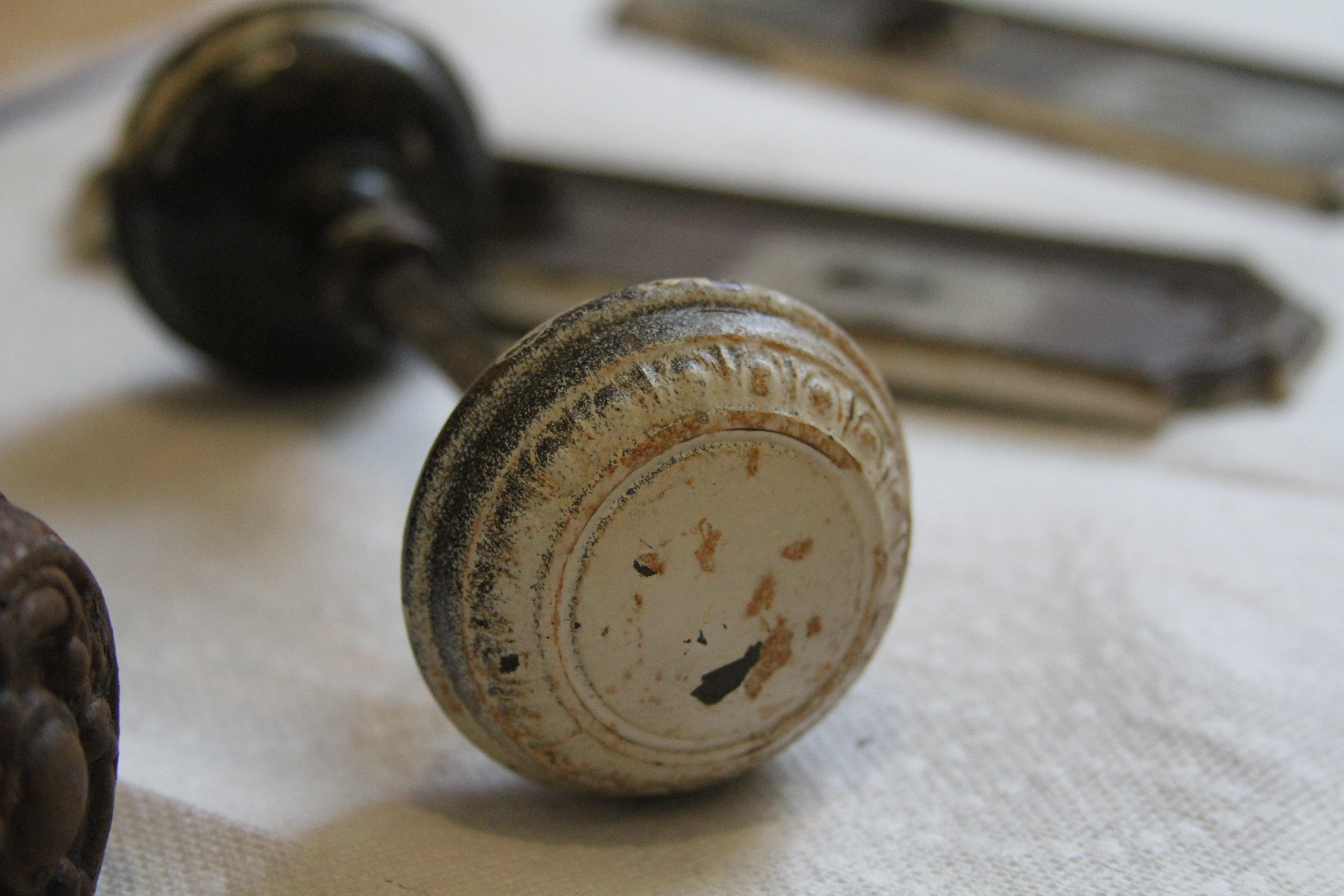
Egg and Dart patterned door knob.

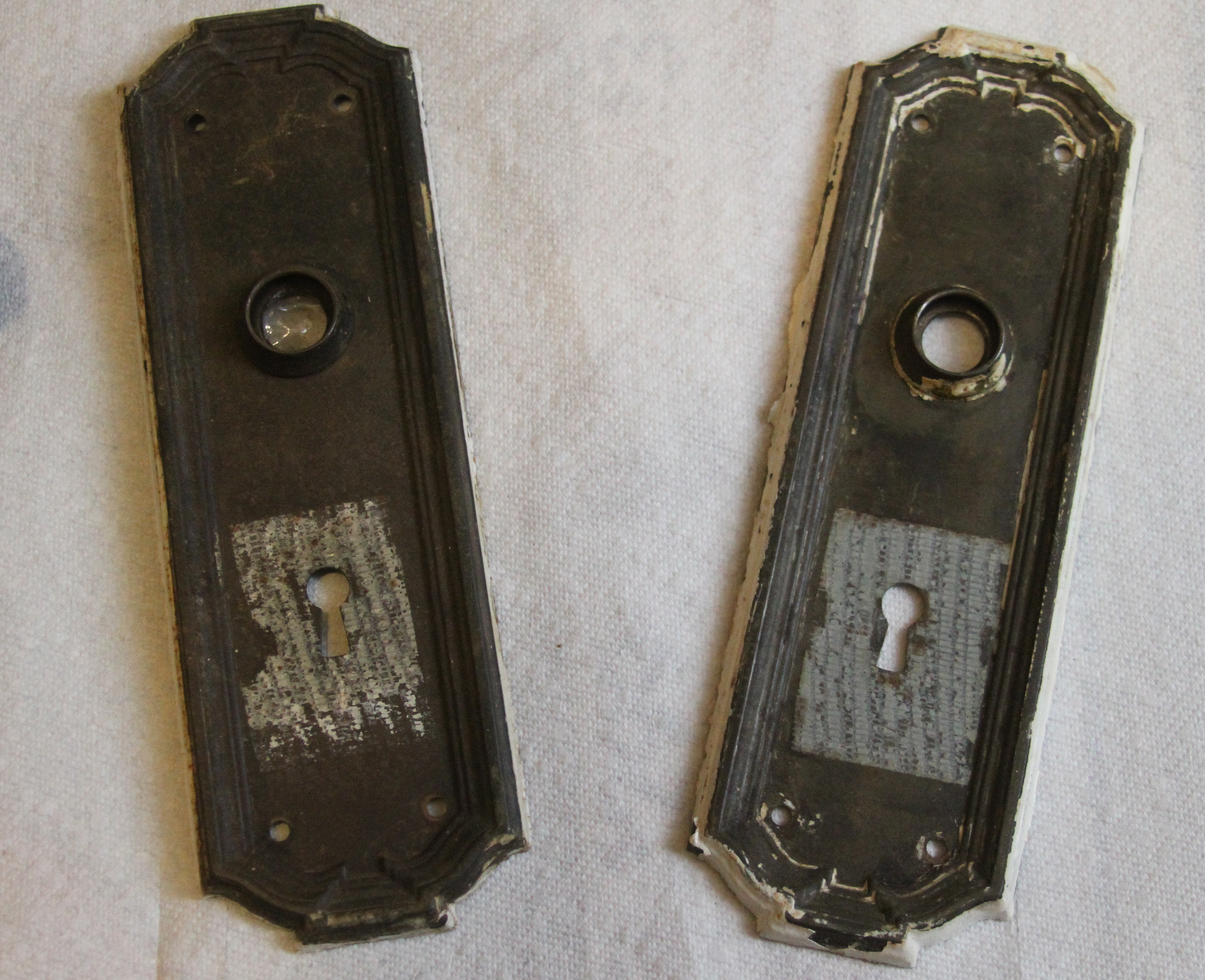
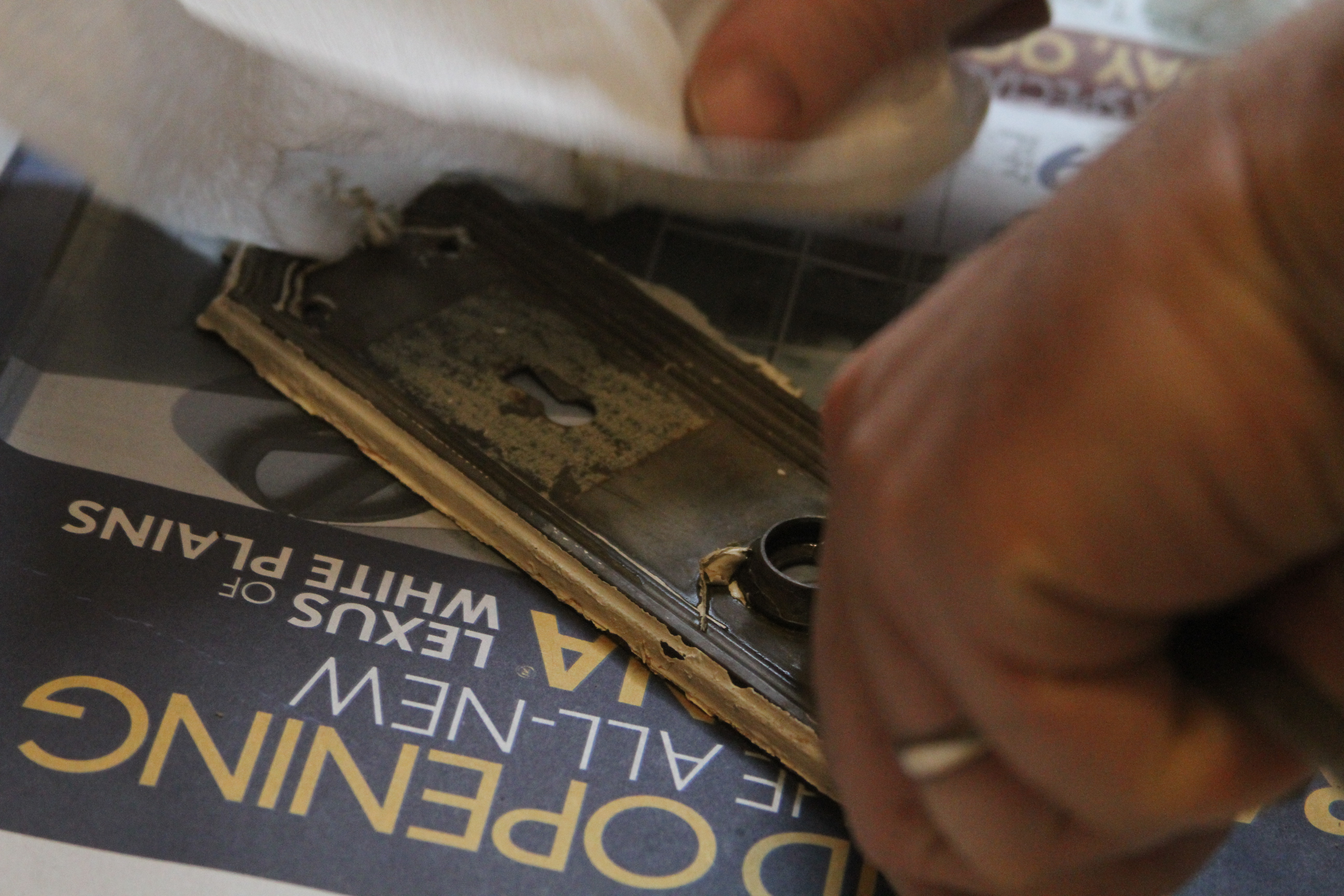
Back plates with tape residue

Back plates with tape residue

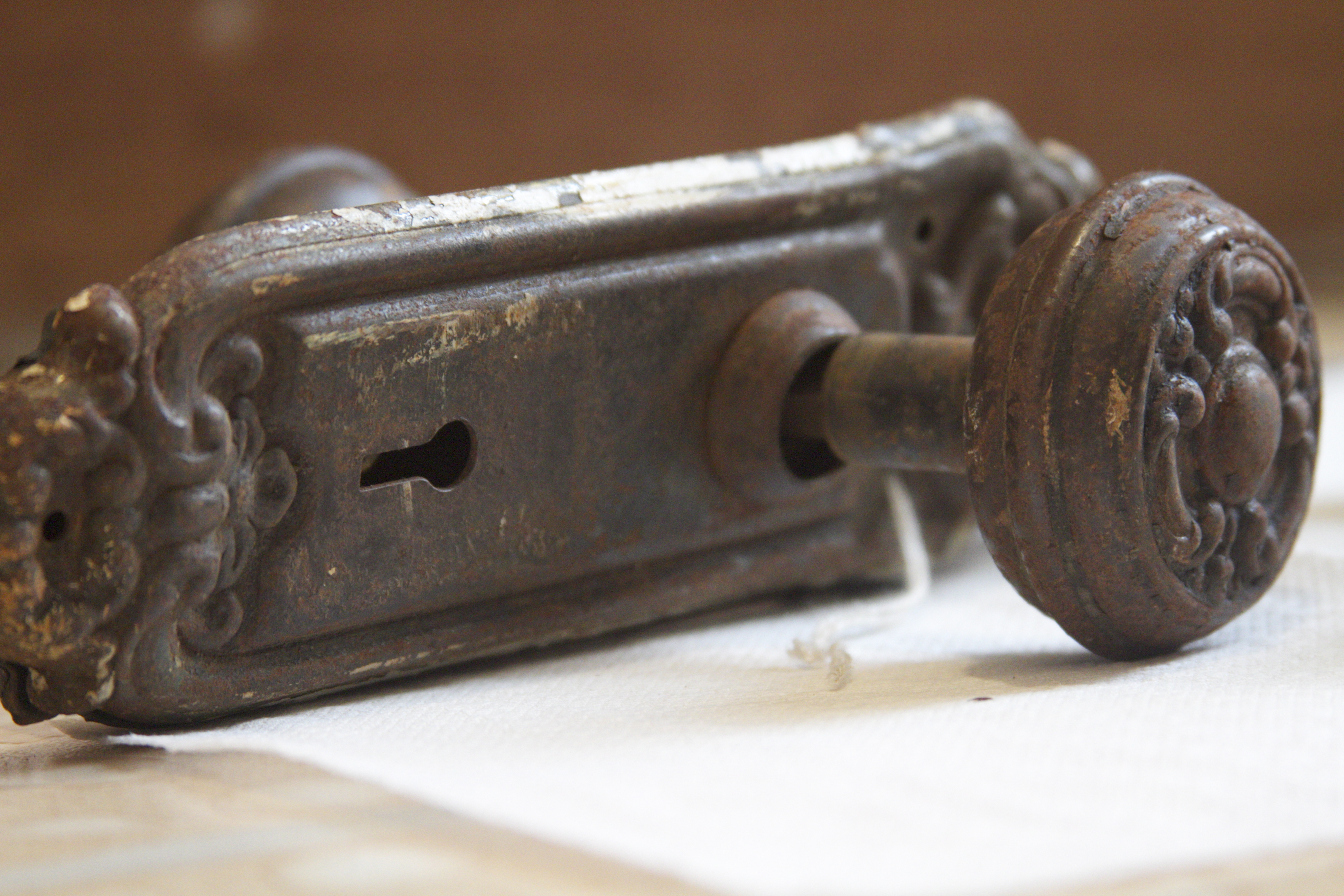
Intricate (and rusty) door set

Intricate (and rusty) door set

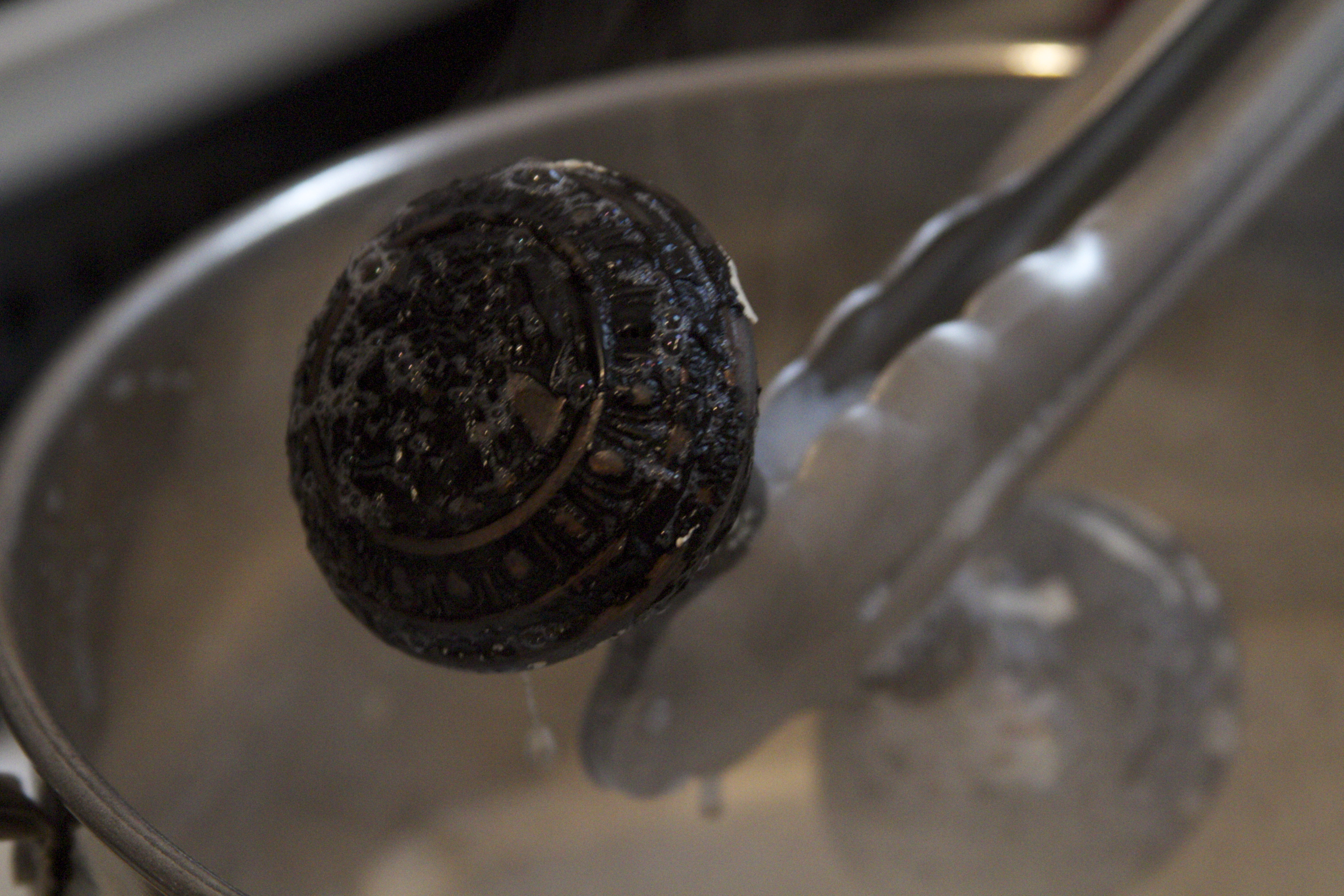
The door knobs and plates we picked up on our trip to the Historic Albany Foundation’s Parts Warehouse were no exception. Luckily, removing paint and grime from hardware is actually pretty easy. It just requires water, baking soda and a little time. Using a stainless steel pot (once you use it for this,  you can’t use it for food anymore, so make sure it’s marked accordingly).

IMG_9837

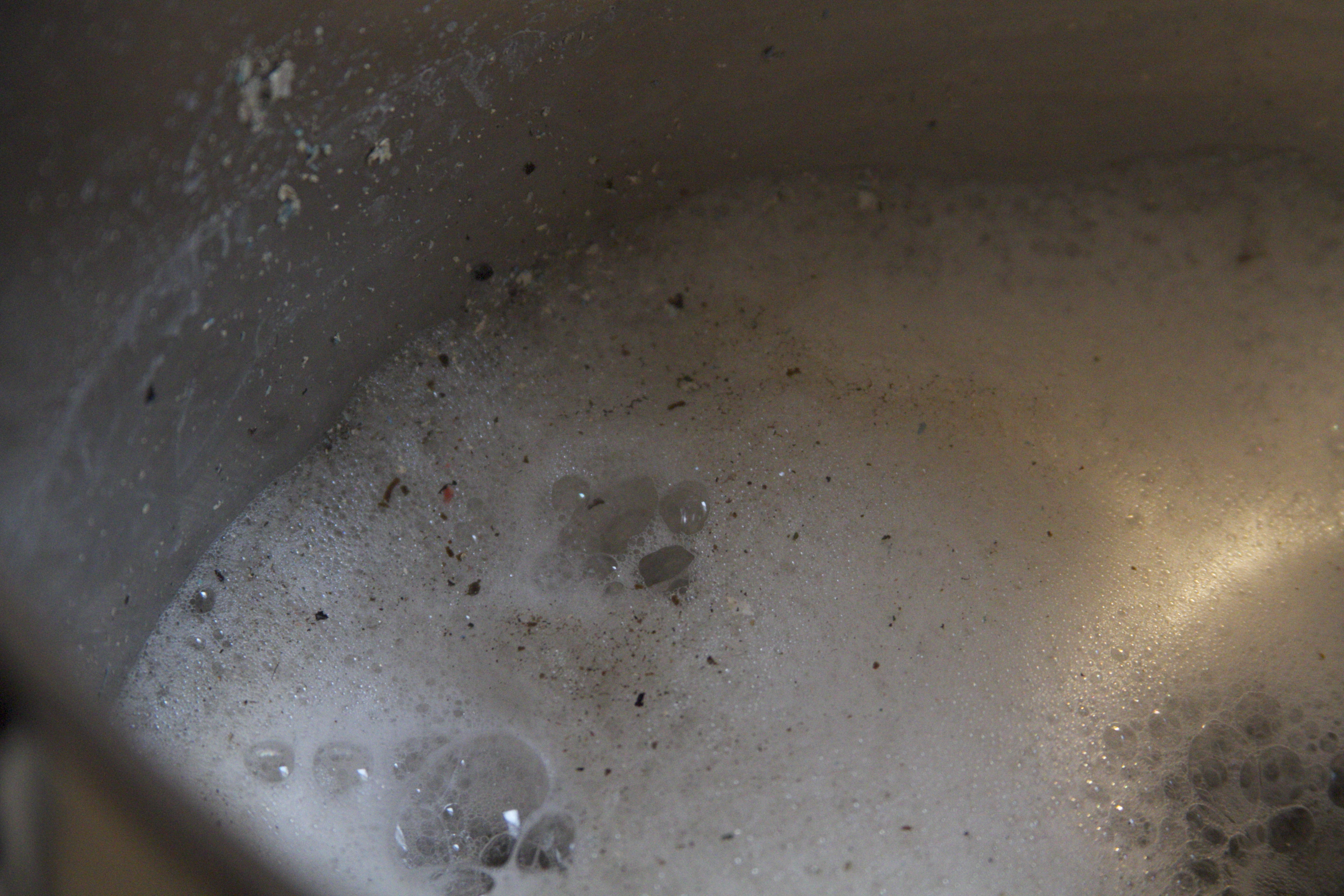
Boil up water with  baking soda. How much baking soda, you ask? Uh… a bunch? Some? I’d say  pretend you’re boiling pasta and add about 4 or 5 times more baking soda than you’d add salt (you can also substitute the baking soda for dish soap, just be careful not to let it boil over, as things will get very sudsy). Once the water comes to a boil, toss in your hardware. You’ll see the gunk come off in the foam.

IMG_9840

Let it boil for a little while, then check to see how your door knobs are doing.

IMG_9842Some of the items may need a bit of scrubbing. The paint will be soft and bubbly and will pretty much wipe off. It goes without saying that they will be very hot, so curb your wild enthusiasm as you grab the searing metal to admire your handy work.

IMG_9843

IMG_9848_2

Back plates free of paint, but still looking a little sad

Once your hardware is free of paint, you may find that it’s still looking a bit shabby. Sometimes items get rusty after their bicarbonate bath, but it’s all temporary – because you’ll buff the living daylights out of it.

IMG_9852_2

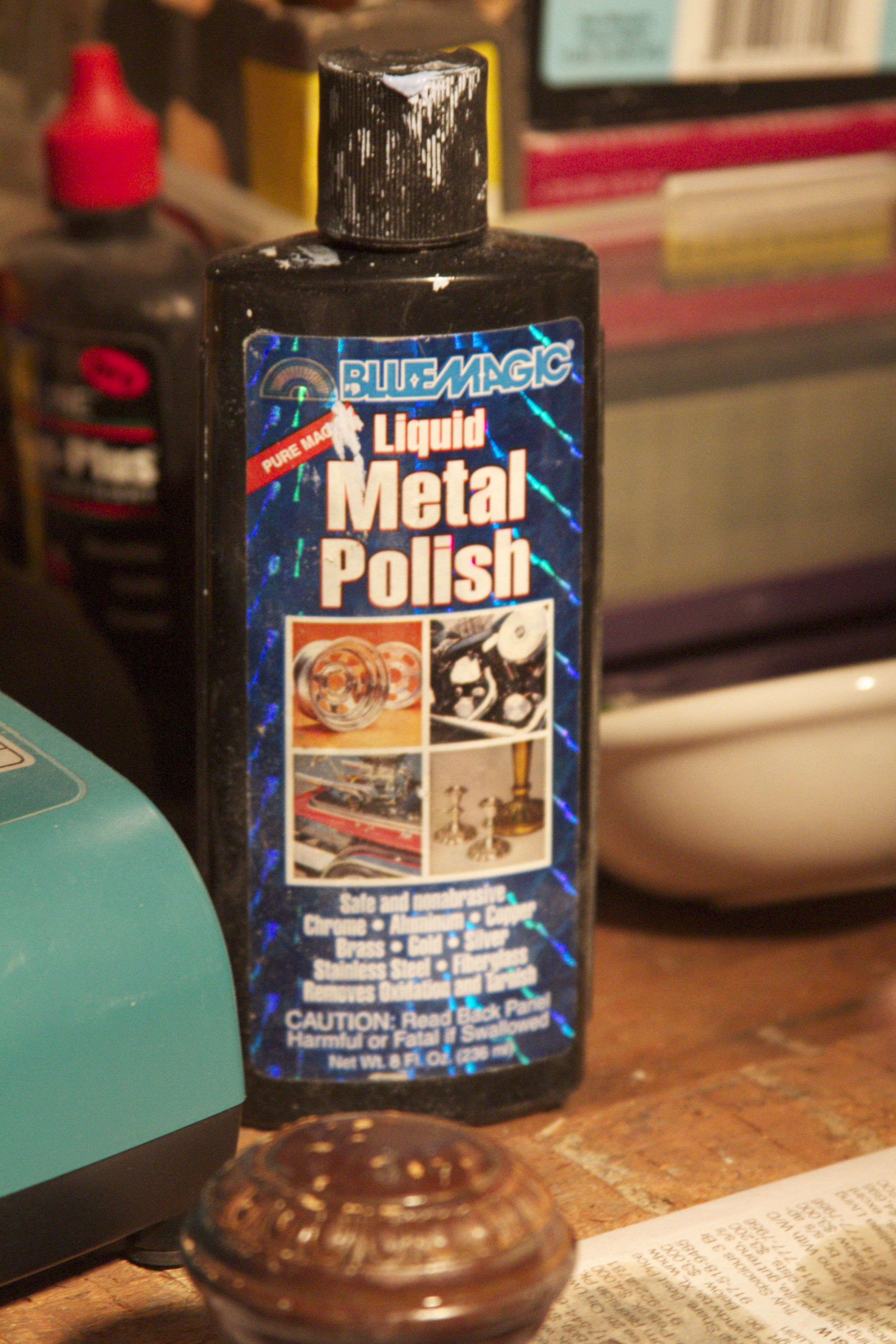
If it’s good for rims and candle stick holders, it sure is good enough for our door knobs

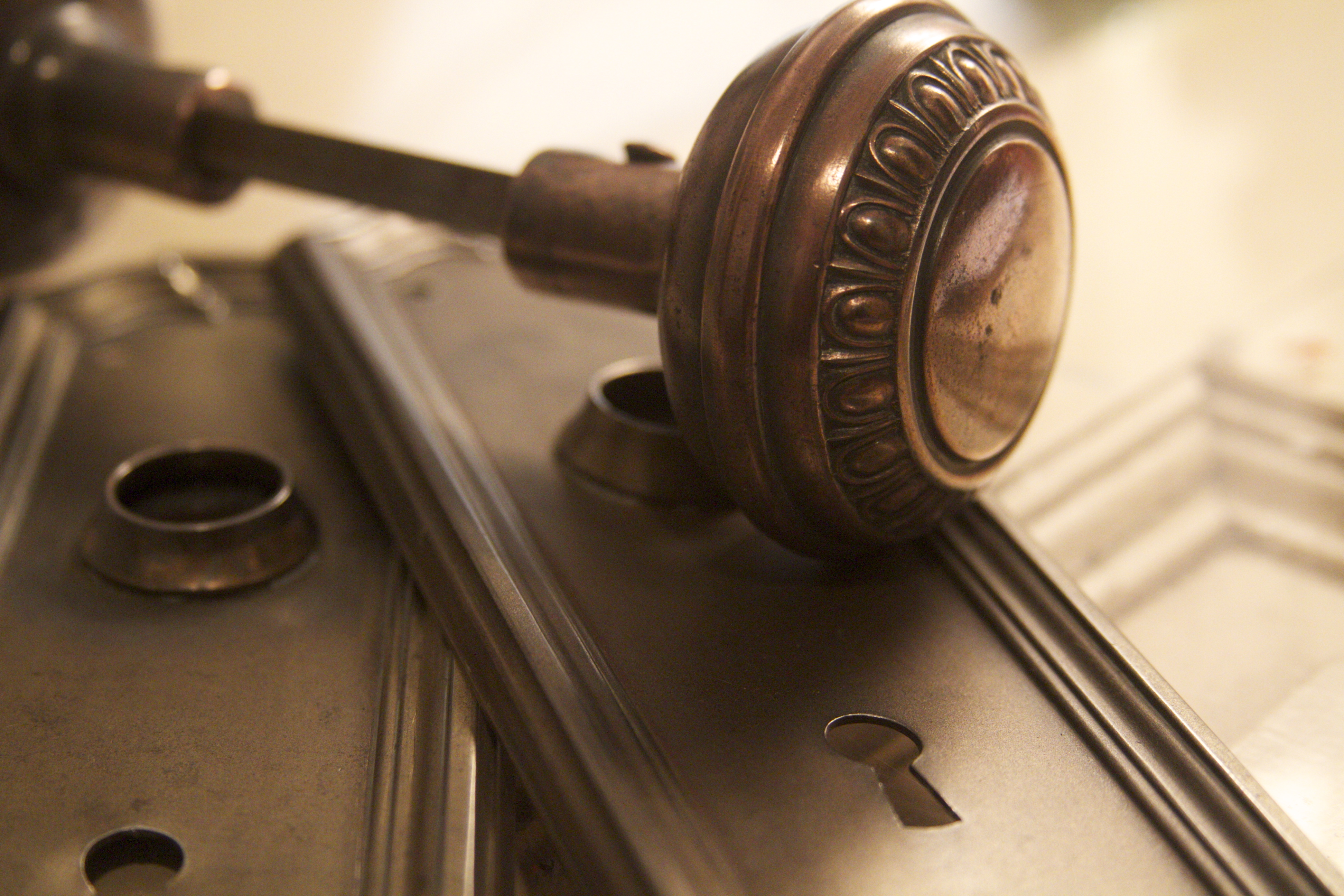
Some metal polish, a little steel wool and an old T-shirt will get you this:

Before elbow grease and after

Before elbow grease and after

After it was all said and done, our door hardware looked like this:

IMG_9855

IMG_9853


House Parts

While our credit card statements may seem to betray this sentiment, we do have a distaste for cookie cutter, mass-produced house parts. Yes, while we’re at Home Depot, Lowe’s and our neighborhood True Value hardware stores multiple times a week, there are things we need that simple cannot be got there. Like a suitable window. Or a proper door. These items require a bit more digging to find the perfect match.

Last week we took a trip to Albany to check out the salvage at the Architectural Parts Warehouse maintained by the Historic Albany Foundation.

HistoricAlbany

On the shopping list: window, door, door hardware, a claw foot tub and fireplace tile. We have been to a lot of salvage places all over the east coast and midwest, and while this not the largest we’ve ever seen, it’s certainly the most organized. You can easily find what you’re looking for. It’s heaven!

Warehouse

windows

more knobs

Chapel of Hardware

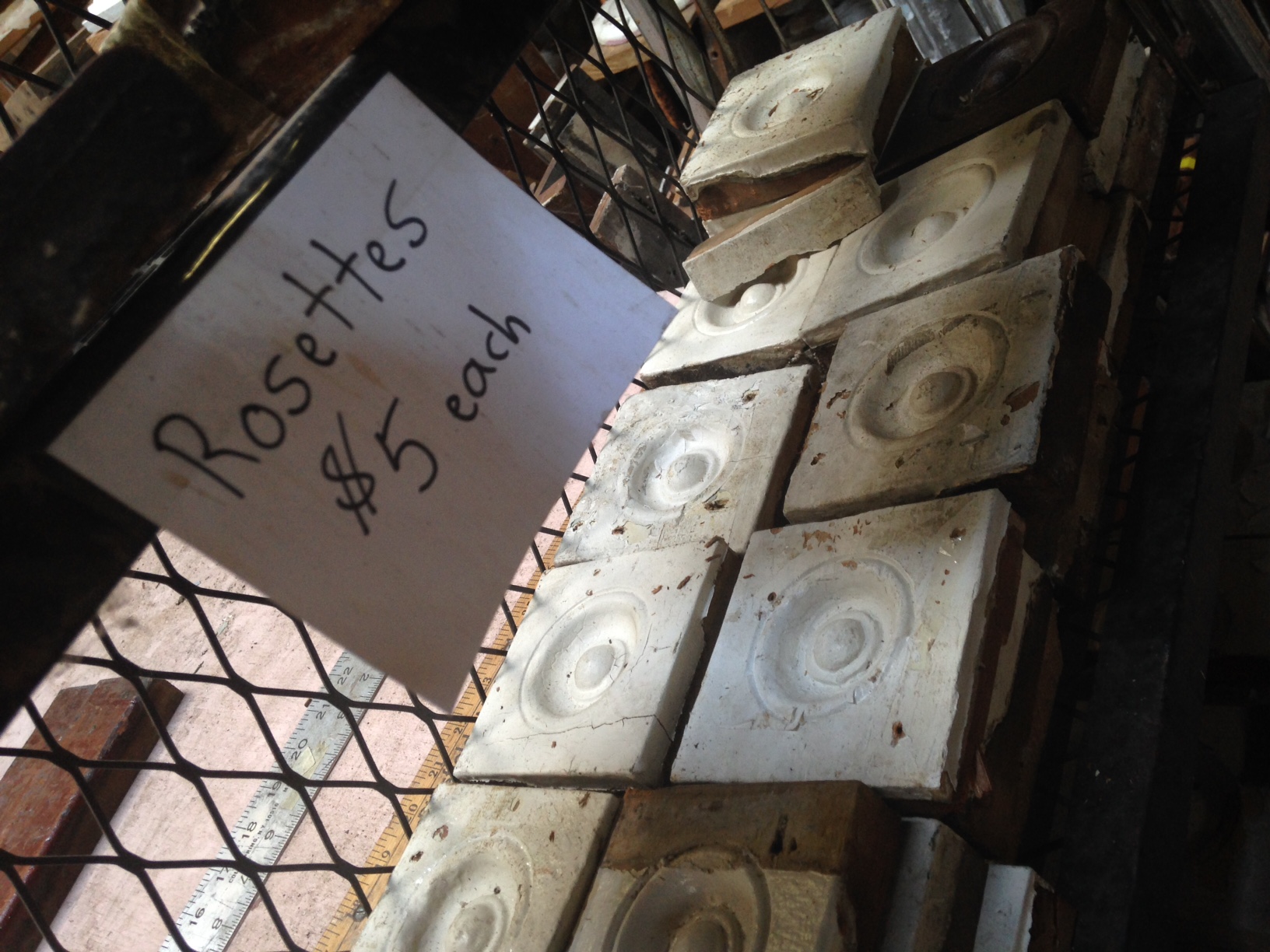
rosettes

We came home with a door, window and all necessary hardware. No luck with the tub, because we’re looking for the smallest size (which turns out to be nearly impossible to find). Also no individual fireplace tiles, although the had a full tile surround, still attached to its plaster and in great condition.

A (very long) post about drainage

Water will do what water wants to do. Water is a formidable adversary. Water seems to like our basement. Yes. We have issues with water.

After a good rain, our backyard used to look like this:

Puddle

If you are familiar with Brooklyn brownstones, you know that they were typically built over a stone cellar. You may also know that brownstones typically have only one downspout. That means that the whole roof drains to just one area. Not only our roof, but all of our neighbors’ roofs do the same. Some people have connected their downspouts to the sewer line, but most have not. This means that a whole lot of water ends up pudling in the back yards – and water being water, it will follow the path of least resistance to go someplace else (which in our experience leads straight to our cellar).

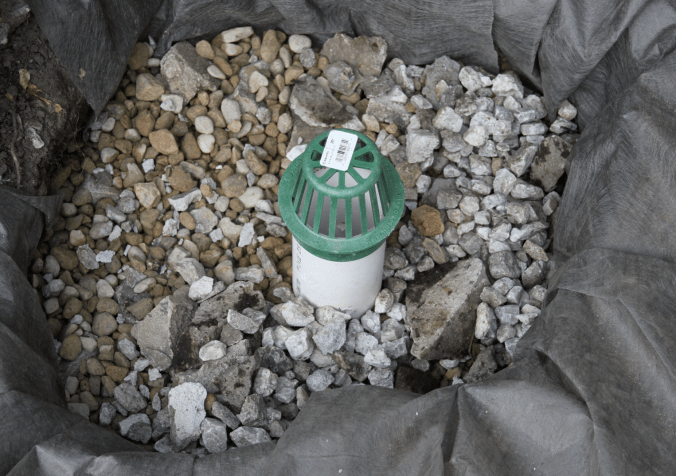
There are a few things you can do to gently persuade water to go the other way: you can improve the grading so that it slopes away from the house, for example. But given the volume of water our backyard collects, that in itself is not the solution. We needed to do more. The easiest solution is to do something like a French drain: dig a hole, line it with landscaping fabric. Place a PVC pipe, with holes drilled into the sides, into the hole. Fill the hole with gravel. Cover with landscape fabric and the surface material of your choice. Add a drain cover to the pipe. Voilá. You have made a drain.

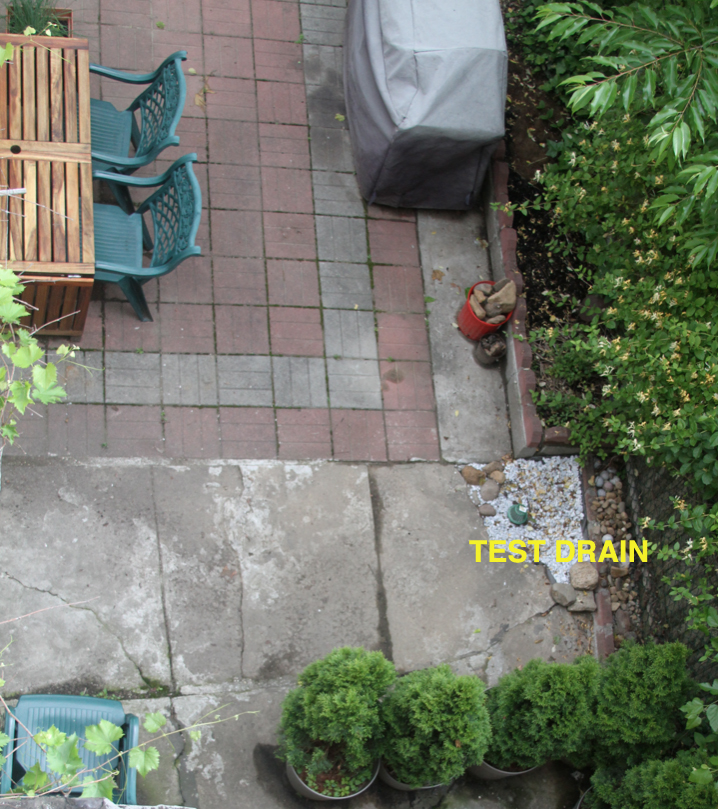
Last spring, I dug a test drain. It was about 2 1/2 feet deep and about 18 inches wide. It improved the moisture situation in the basement by about 75%. If one drain is good, 3 more would be much, much better!
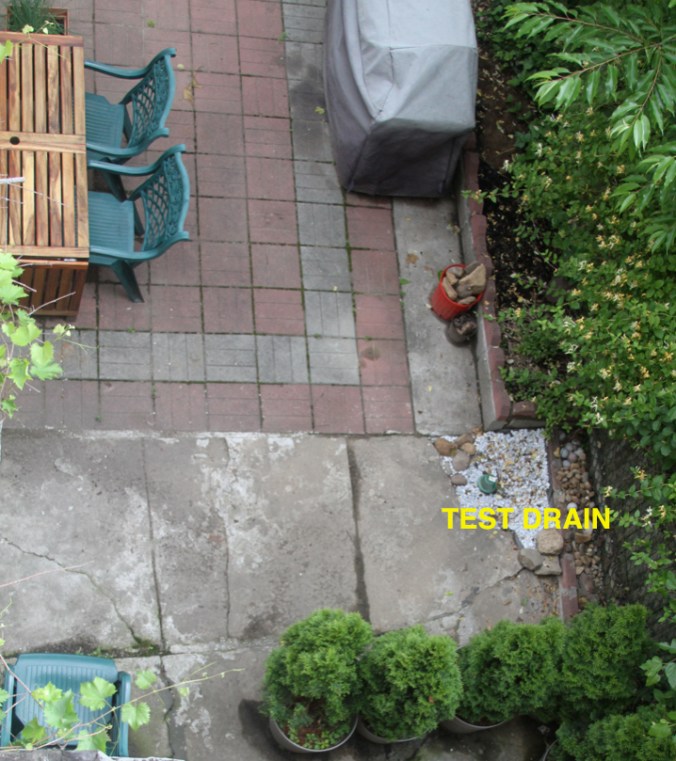
Test Drain

Armed with a brand new sledge-hammer, shovels and the enthusiasm of people who just don’t know any better, we set out to dig one blissful Saturday afternoon in July. Not 30 minutes in, this happened:

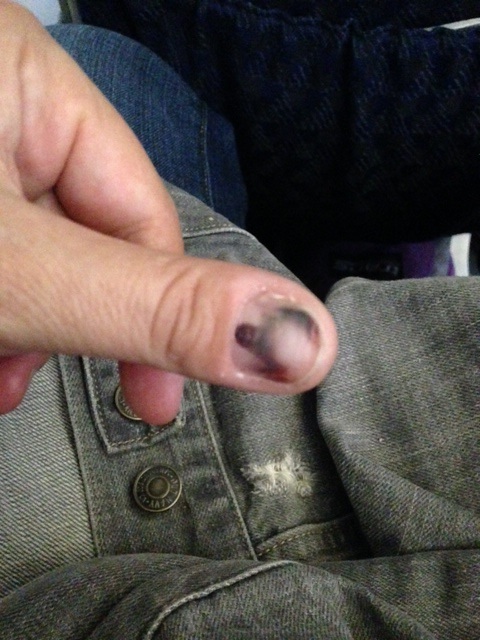
Thumb

In our eager enthusiasm, the rhythm of drop chunk of concrete/pick up chunk of concrete fell out of sync and I ended up with the raddest manicure in all of Brooklyn (I also didn’t do a damn thing for the rest of the drainage project, because I had a boo-boo).

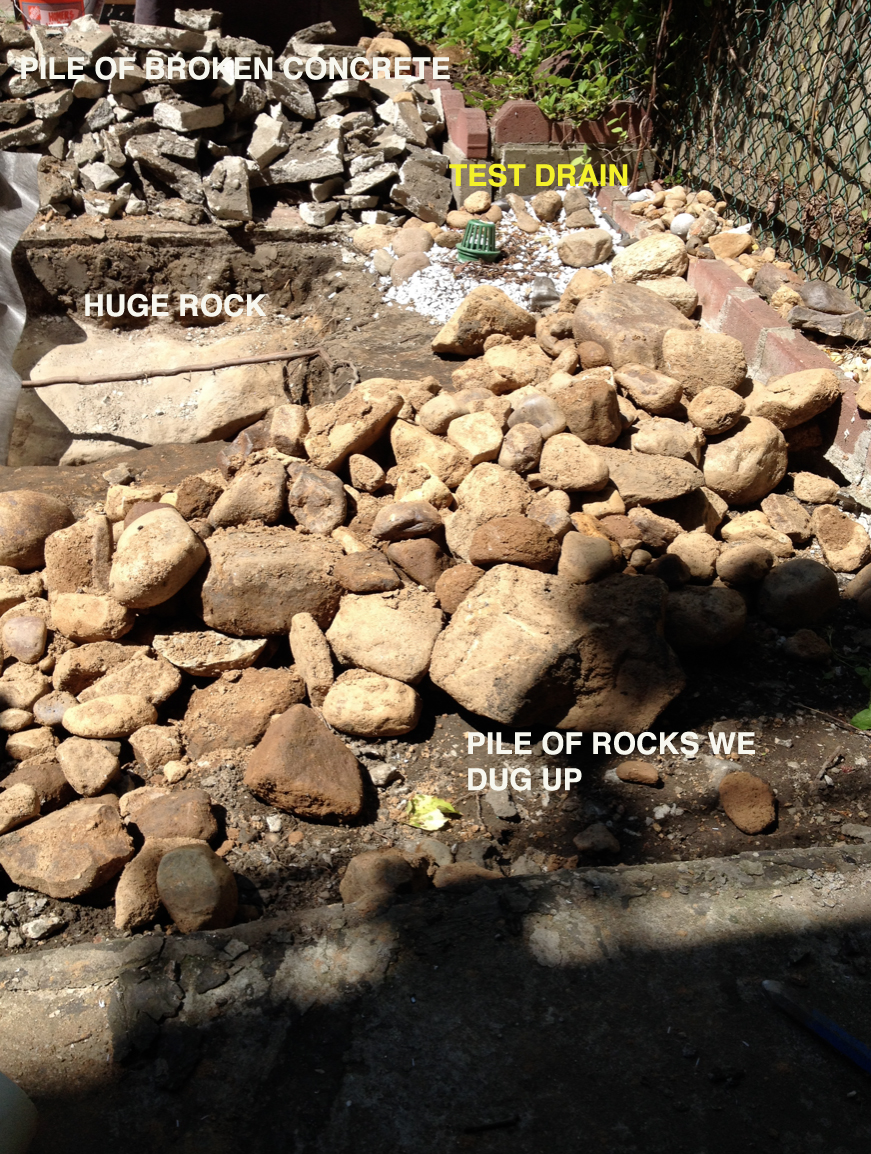
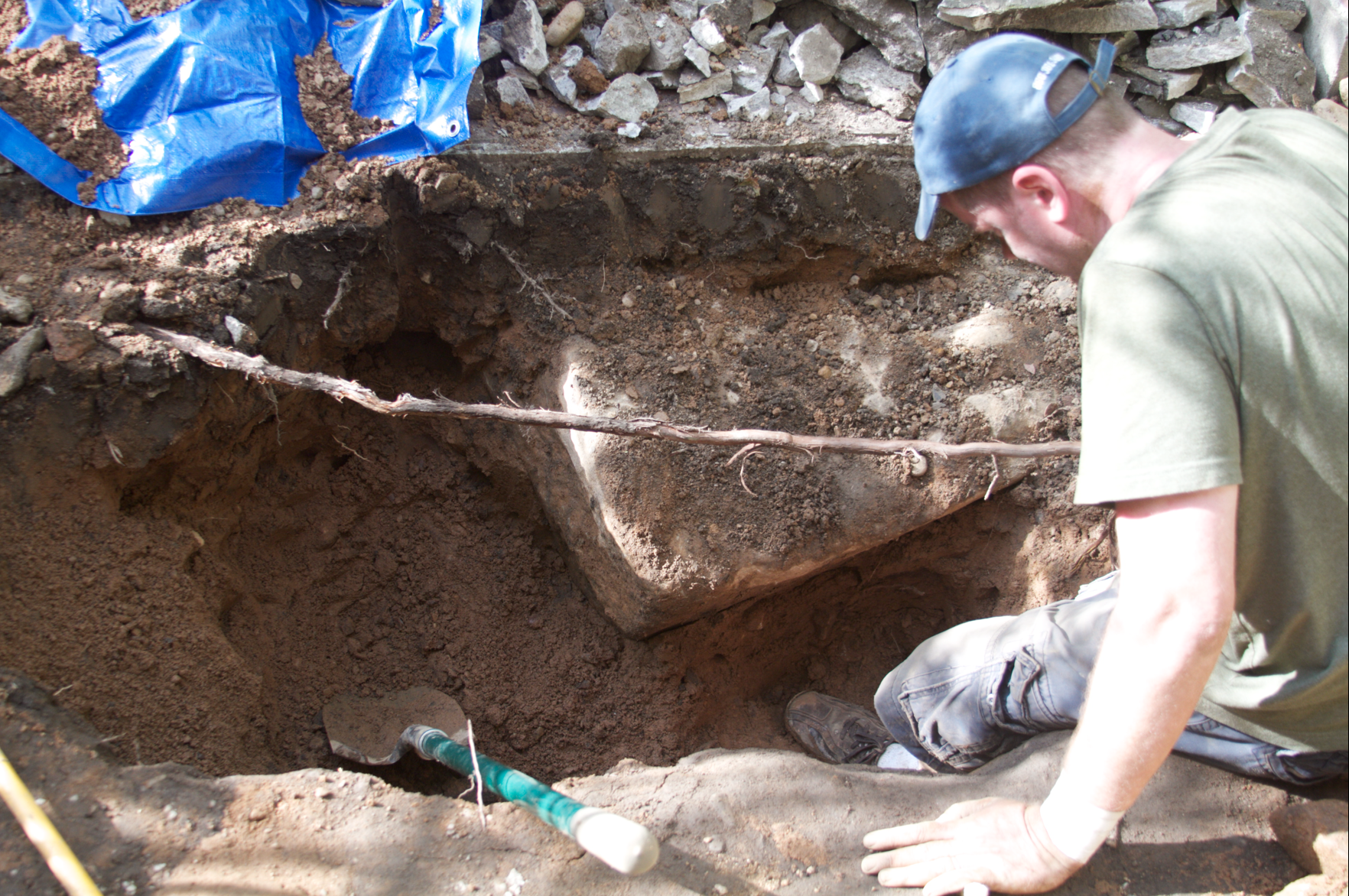
With me out of commission, the Mr pushed on. The first thing we learned is that our backyard is made up mostly of rocks. This sort of makes sense, since these seem to be left over rocks from the foundation. I suppose whatever didn’t get used, just got left behind and eventually buried. This is a small sample of the huge pile of rocks we dug up:
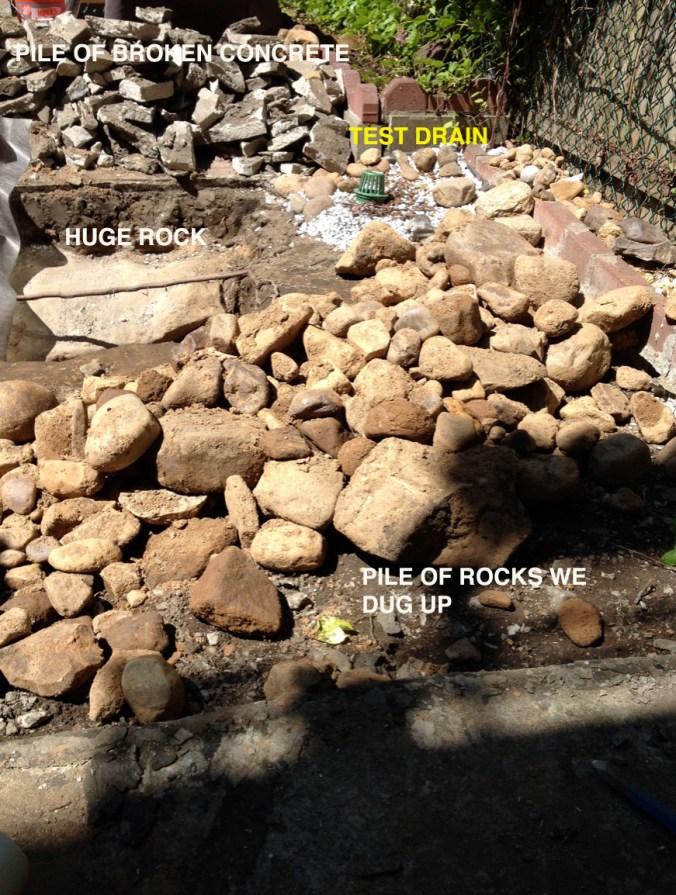
Backyard rocks

The plan was to dig 3 separate holes, but they quickly morphed into more of a trench because we had to un-earth SO.MANY.ROCKS! We found this super giant rock, which could have been an awesome addition to our landscaping, but too damn heavy to move.

Giant Rock

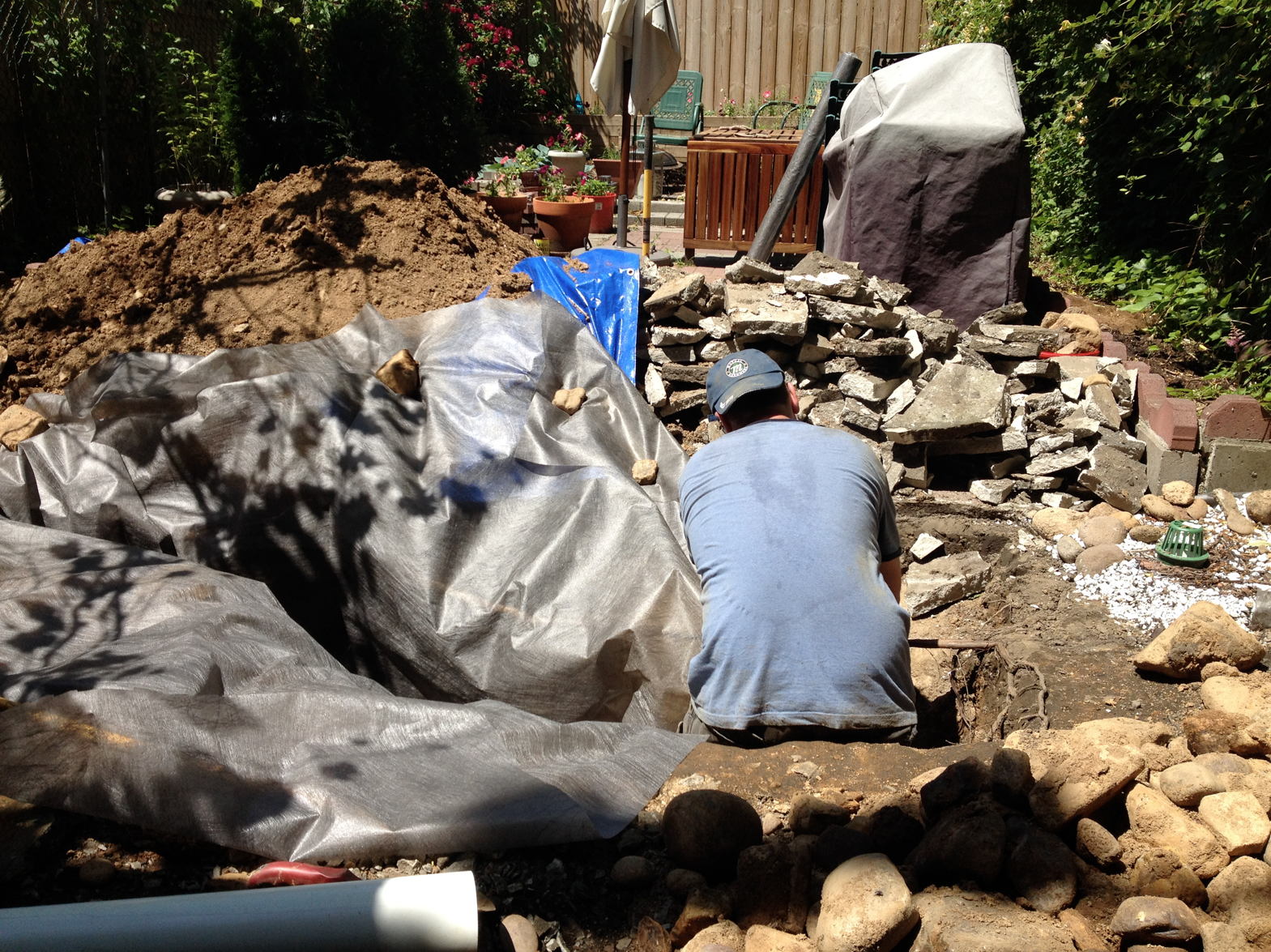
This is the mess we made, put into perspective.
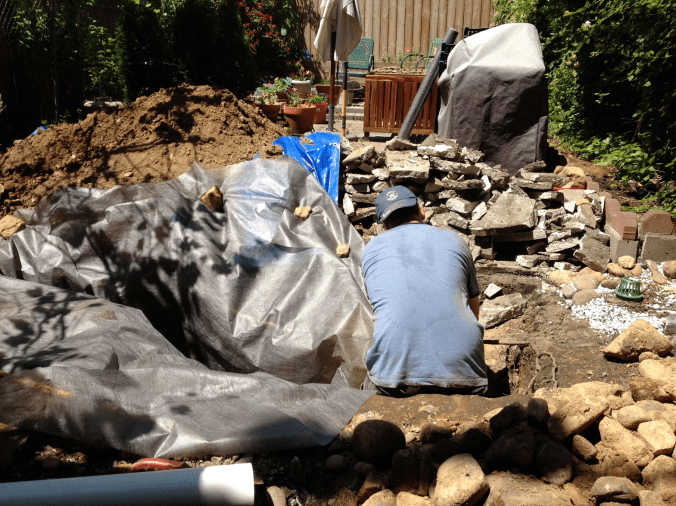
Big Mess

Making the drains is quite simple: Dig a hold about 3 feet deep and line it with landscape fabric. Place a couple of inches of pebbles at the bottom. Take a PVC pipe and drill holes all up and down the sides (we used a 3 inch pipe), and place the pipe vertically into the pebbles. Fill the rest of the hole with pebbles/gravel, then cover with landscape fabric.

Drain schematic 1

Place whatever surface material on top (soil, pavers, etc), and put a drain cover on the pipe. Ta-da! You’re done.
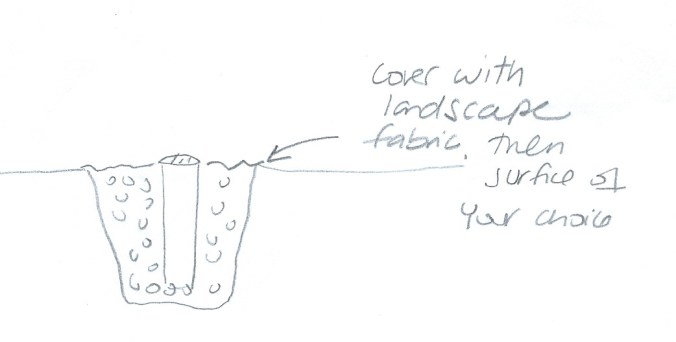
Drain schematic2

This is what the test drain looked like, half way done:
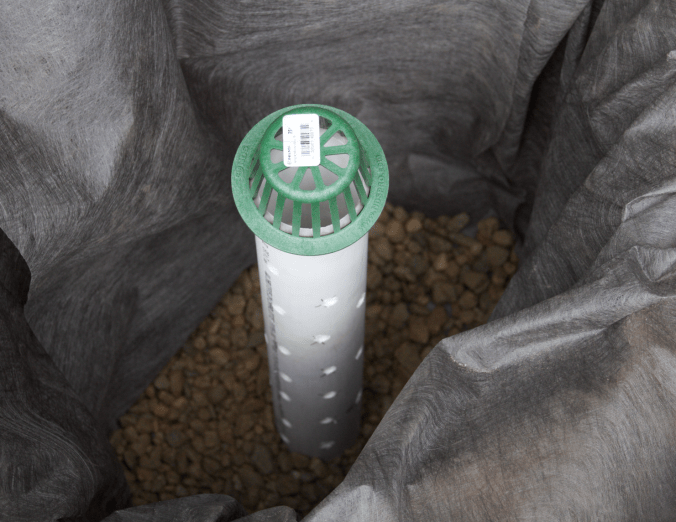
Screen shot 2014-10-15 at 4.29.32 PM

Test drain almost finished:

TestDrain in Progress

Instead of gravel, we crushed up the concrete we removed to dig the drains. That solved two problems: what to do with the concrete, and having to buy gravel and then carry it through the house to the back yard. Also, it’s immensely satisfying to bust up things with a heavy sledge-hammer (so long as you are careful not to smash your thumb).

The drainage project has been finished for a few months, and our basement has been dry ever since. Unlike many of the projects we take on, this one was relatively quick and simple – but it was hard work (I’m told…)
IKEA Table x The Elements

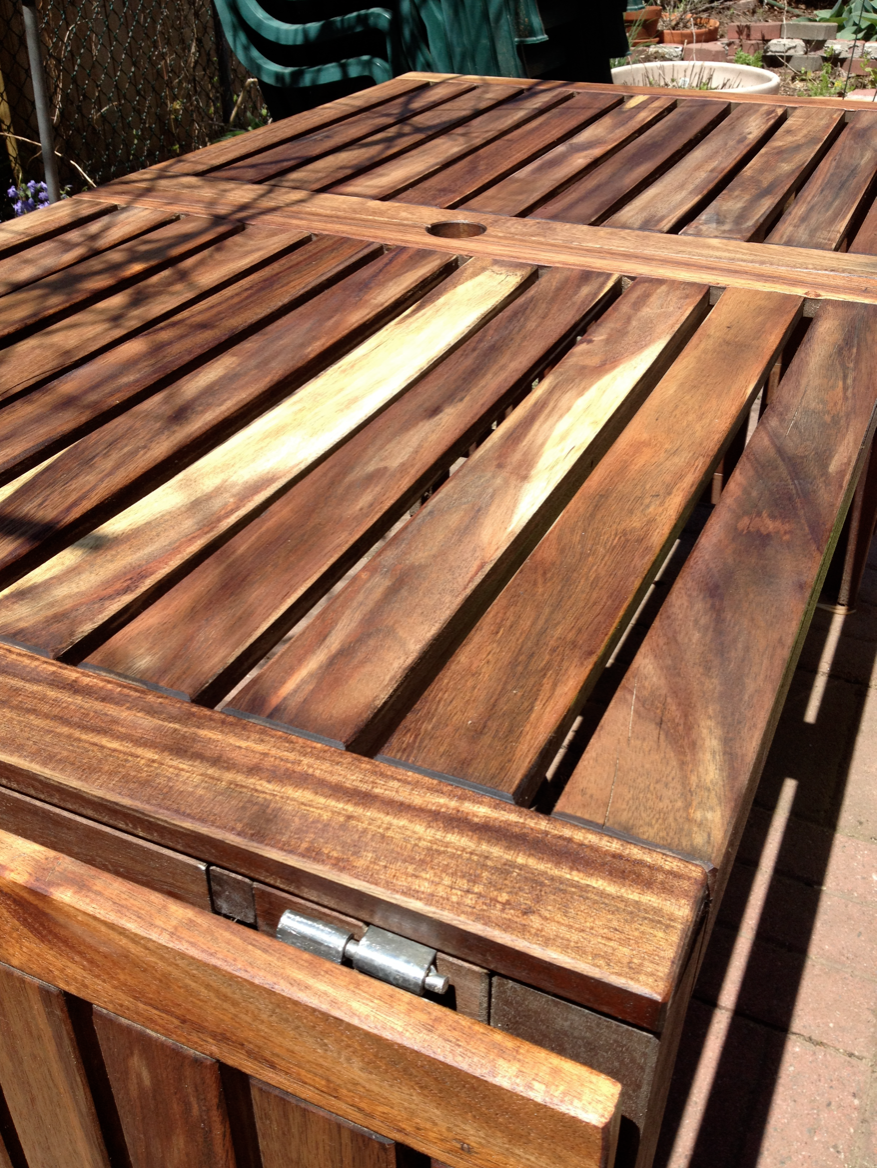
Our outdoor Ikea table was looking a little rough after a couple of years out in the elements. The sun/rain/heat/squirrels were definitely getting the best of it. We decided this was an easy enough thing to do over the course of one Sunday afternoon  – and while we frequently grossly mis-calculate how long something will take to finish, this one was spot on.

Table Before
We sanded whatever was left of the original finish to expose the wood, finishing it off with a super fine grit paper.

Table sanded

After wiping off the dust and giving the table a good cleaning, we followed up with about 4 coats of Tung Oil (24 hours between applications). This photo was taken after the first application.

Table after

I like how the oil brought out the natural variation of the wood, previously hidden by whatever tinted finish Ikea uses.  This is our first attempt at using Tung Oil outside but I figured since water just beads off, it would be a good choice. It has worked OK thus far, but I find myself re-applying it in spots here and there.  On the plus side, it’s absolutely non toxic and you don’t have to worry about fumes or residue.

A note on Tung Oil: I used pure Tung Oil, not the stuff from the hardware store (which usually has other chemicals added to it). The Milk Paint Company stuff is a bit hard to find in a store (the place where I bought mine has since closed). You can order it online or Google your way to a local store that may sell it.

Black Doors

Things have been a bit sluggish over the past few months, but a few projects did get crossed off the list. First up: front doors.

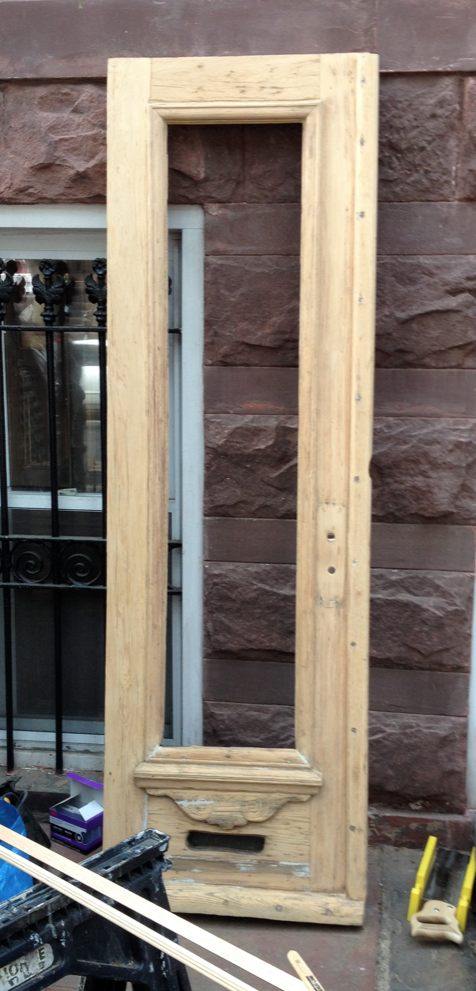
The doors are not original, but they are close enough. The previous owner installed these and overall, we’re really happy with them. They are a close match to what the original doors looked like. The problem was the finish – or lack thereof. Our house has southern exposure and it gets quite a bit of morning sun, which was unkind to the varnish.

Here is a before/during shot (of course I forgot to that a proper before photo). Both sides used to look like the one of the left.

Door (before)

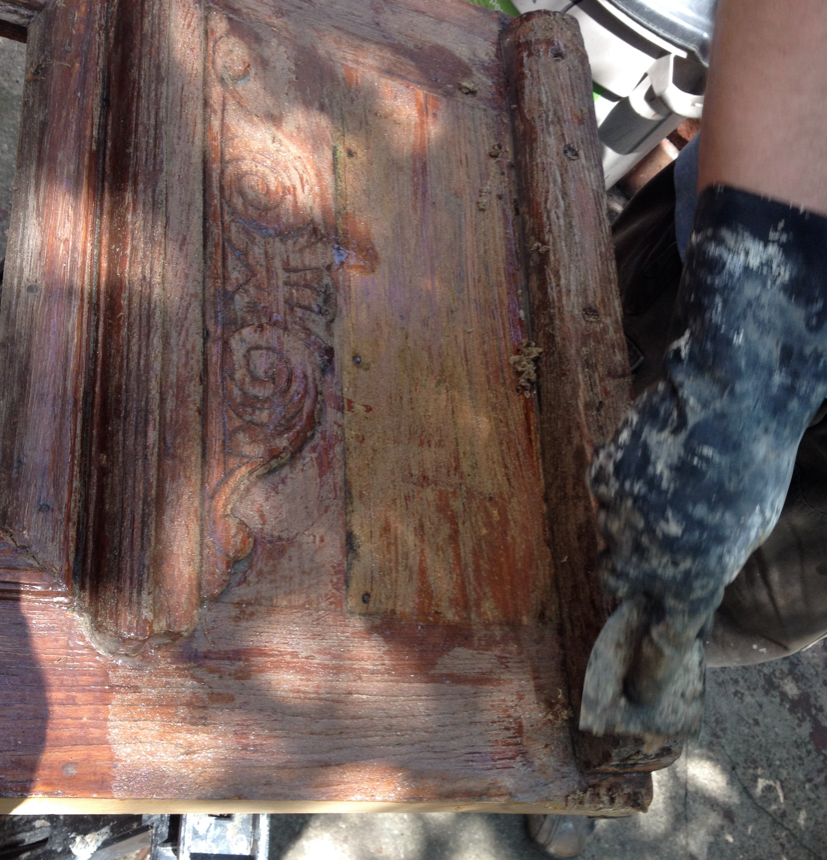
Removing the finish (with ZipStrip)

removing the finish

Once free of the varnish (and whatever else coated the door), we gave it a light sanding and filled in some holes with putty.

sanded and puttied

The wood was quite damaged in some spots, and we decided it would be better to paint rather than stain it.  We decided on black with just a tad of shine (which is a fun thing to go buy at the Benjamin Moore paint store).

– You just want black?

– Yes.

– We have this new onyx color that has a little bit of gray…

– No thanks. Just black.

Anyway, here is what it looked like with one coat of paint:

painted

And this is what the doors look in place. Of course, we forgot to paint the outside of the trim holding the glass. We also learned that entry door hardware is absurdly expensive (particularly the period appropriate kind I want), so the full makeover of the door will have to wait a little longer. Considering I’ve been slacking on the façade job, pretty sure no one will notice the unpainted trim…

(almost) done

Early Stages of a Garden

It’s been a cold, long winter in New York City. Yesterday was the first day of spring. Next week, we will likely be smacked upside the head with a Nor’easter once again. I am so done with the Polar Vortex.  This time last year, I was already playing in the dirt. This year, however, I’ve been keeping my excursions outside to a minimum. A winter person I am not.

We spend a ton of time outdoors during the warm months, and while our back yard has been presentable(ish) over the past 2 summers, a big overhaul was always part of the house master plan. At some point. In the very very distant future.

Backyard2012

Backyard in 2012, our first summer. The big bushy plants to the right are tomatoes. It was a fantastic year for tomatoes.

Backyard2013

The backyard in 2013. The fence was replaced and we built a planter/retaining wall to compensate the height difference between our yard and the one behind us. It was a terrible year for tomatoes.

3/4 of the way through this particularly harsh winter, our garden redo got bumped up in priority, courtesy of the water that came gushing into our basement during a rain/freezing rain/snow/rain event. We realized we needed to pay some attention  to the garden drainage and the pavement that is not sloping away from the house quite enough. Oh, and the holes. There are holes where the coal chute joins  the house.  Because, why not?  True to the old adage of “project begets project,” we figure we might as well go the Full Monty on this. In addition to the must-do-to-keep-the-basment-dry (re-sloping the surface closest to the house and installing French drains  throughout the yard), we’ll be doing a fair amount of cosmetic work, too. Woo hoo landscaping!

FloodedBackyard

This is what happens when it rains: the water has nowhere to go, so it just hangs out.

Puddle

This is actually really close to the house. Not good.

About 4 months ago, we had preliminary plans drawn by a fantastic landscape architect (aka, dad). The design calls for separate living areas in our compact yard: seating under the grape-vine (new arbor, pebbles underfoot), a grilling area and eating area (both paved with reclaimed old pavers), as well as shrubs and perennials evoking a Victorian garden.

Garden Board

The design, along with some of the materials and plants. Yep, I do suck at Photoshop.

To put the design into practical perspective, I ventured outside today and drew it in chalk, making some changes along the way. I think I worked out most of the kinks (and found a dead bird along the way).

Chalky

Pardon the ugliness, but the garden is still asleep.

Dad says good garden design has a bit of mystery drawn in. I don’t think he means all the blank spots on his sketch, but rather that one should not be able to see everything all at once, that one would wind their way through, and discover new areas. That is easier said than done with a back yard that measures about 40 feet x 18 feet. Dad proposes a complete re-think of how we use the space. The table will move to the back of the yard, where the vegetable garden is (at some point, it will get sanded and slathered with Tung oil – yep, on the list). The area beneath the grape-vine will get fine gravel, and will house a seating area with custom-built wooden benches. We’ll reduce the hard surfaces of the yard (which will also help with drainage), and use reclaimed old brick pavers as our main surface material.

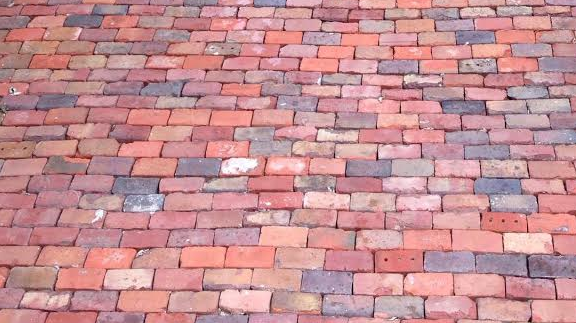
Salvage Pavers

Sweet old brick pavers. How I love thee!

It all sounds fine and dandy. Once reality sinks in, including carrying all this stuff through the house, I’m sure it will be a different story.

Lost & Found: toy gun

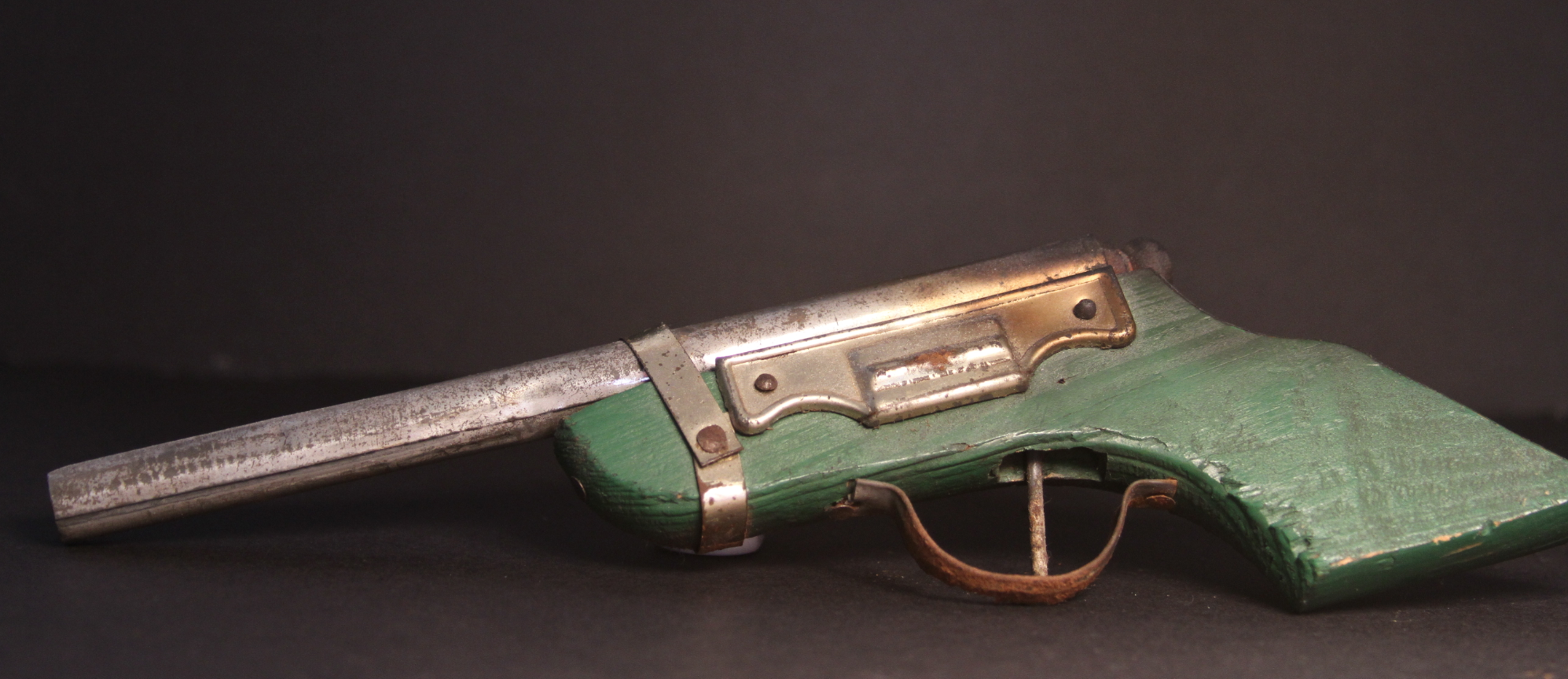
Pocket doors are a great place to find things. Usually it’s overgrown dust bunnies, but every now and then a more interesting find awaits. Our house has 6 sets of pocket doors: one on the garden level, 3 on the parlor and 2 on top. The first set of doors, off the parlor entry, has a musty smell problem. When temperatures rise, an odor that can best be described as “old house funk” wafts from the crevice between the walls. It’s not terrible, but mildly unpleasant.  In an attempt to make the smell go away, we decided to clean between the walls. Using the vacuum cleaner and a long hose, this thing appeared:

Toy Gun

Having the vacuum hose clogged by a gun-looking object is a bit of a scary experience. Luckily after a closer look, we realized it’s just a toy. There are no markings on it to indicate who made it, but it seems to have been  mass-produced. Here is a photo of the other side, which got a bit rusty:

Toy Gun rust