Stubborn paint

photo

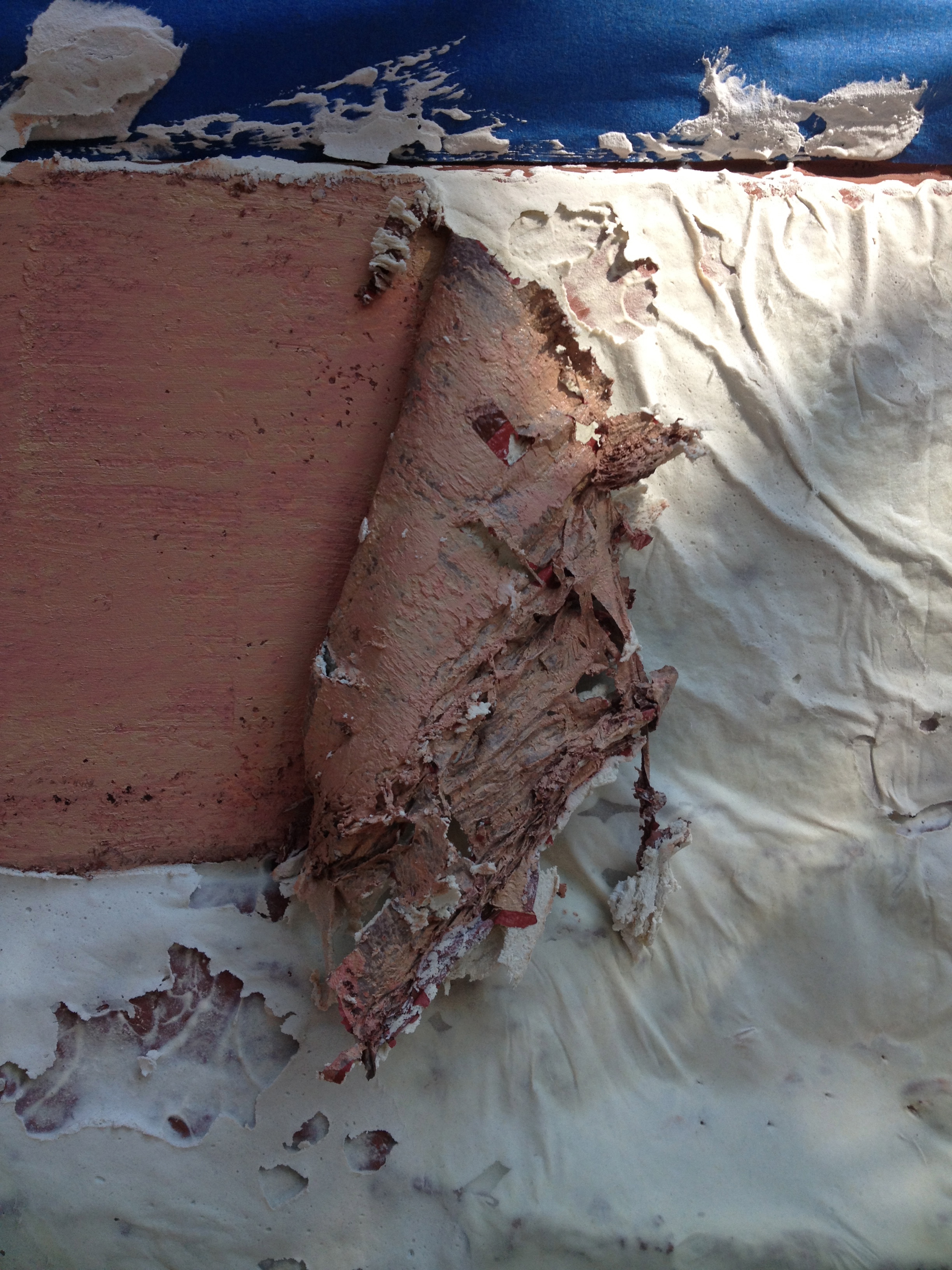
Progress is slow but steady, with a good portion of the paint on the garden level gone. For most part, it’s a pretty straight forward process: apply the goop, cover with paper, wait, scrape, wash. Repeat if necessary. But since this is a learn-by-doing type of project, I found out that removing paint from where the stone has been patched is  nearly impossible. It takes a combination of Peel Away 1 and Peel Away 7, and still the results are ‘meh’ at best. You can see splotches of stubborn pink on the far right of the wall on the top of the stoop, and also under one of the parlor windows. It simply does not want to go away. I’ve experimented with dwell times and it seems that a minimum of 24 hours is necessary. In some cases, 48 is actually better. Rain doesn’t seem to be a problem, so long as the area is covered with the paper stuff.  Just to be safe, I tape up the edges with painter’s tape.

The exposed stone in the photo has not been washed with the citric acid neutralizer yet, so you can still see the white-ish film of alkalinity in some spots. I figured once the garden level wall is finished, I’ll neutralize all at once, since until then it gets constantly splashed and gunked up.

It’s been fairly tedious do get this far, yet it’s also quite satisfying to pull huge chunks of paint off.  The fact that the neighbors constantly remark on my stubbornness to take on this project also means I need to see it through – at least up to where I can safely reach. I am hoping that by Sunday the lower portion of the wall (from the parlor windows on down) will be finished. Fingers crossed!

Weekend projects by crazy people

A  comment from a neighbor pretty much sums it up: “I always see you here, working. Never partying.  Just working.”

Before

I’m pretty sure the neighbors think I’m absolutely certifiable. Stripping a stone façade is really not a typical DIY project. People usually hire professionals to do that, and methodology aside, I do understand why.  Passers-by provide random words of encouragement, usually punctuated with “that’s a lot of work,” or “this would go a lot faster if you hired someone.” No shit!

This past Sunday over the course of 8 hours, I managed to strip about 18 sq feet of stone. At first glance, seems like a worthy amount, until you realize that it’s really a drop in the bucket. Not accounting for windows and doors, the area of the façade is 558 square feet – give or take.

Some of the paint came off super easy, yet there are patches of stubborn pink that will need a second application of PeelAway. Damn you pink paint!

SlowProgress

The angle of the sun makes it difficult to see any progress. Behold my amazing Photoshop skills! Yellow denotes done-ish. Click to enlarge. 

But wait! There is more!

Because we have two major projects going at the same time (hence the crazy people part) while I scrapped and scrubbed, the hubs worked on leveling the bedroom ceiling beams. The question of the day was “level it to what?” Under normal circumstances, you’d level to gravity: something is either level or it’s not – simple as that. But  nothing is ever as simple as it should be, at least not at our house. As is the case with many old buildings, ours settled over time and the floors are no longer level. The Pink Lady has a noticeable dip towards the center, common to brownstones. It used to drive me crazy and I wanted it gone, but I’m so used to it now I don’t really notice it anymore. Call it charm. Call it being realistic.

The previous fake ceiling was leveled to gravity, making the moldings look super crooked.

Old Ceiling


If we leveled the new ceiling to gravity, then leveled the floors, we would have to open the walls and adjust the all the door openings (2 regular doors and the massive double pocket door), or else the doors wouldn’t close). That just seemed too big of a job in the grand scheme of things.

So reality rears its ugly little head again, and since the dip is normal and is not affecting the structural integrity of the house, we decided to level the ceiling to the floor. By having everything crooked together, it will appear straight. Basically we’ll be mimicking the original ceiling (minus the sag in the middle).  Cooky plan, I know – but it seems like the best option.

After the required number of trips to the hardware store, the uttering of a lot of profanity, and a few beers, we are perhaps a teeny tiny bit closer to being done.

Another day, another project (and a post with terrible photos).

A normal person may look at what projects need to be done and prioritize accordingly. A normal person may look carefully at the options available and make sure not to overburden themselves by taking on more than they can handle. A normal person will finish a project before starting a new one.

Well, normal people we are not.

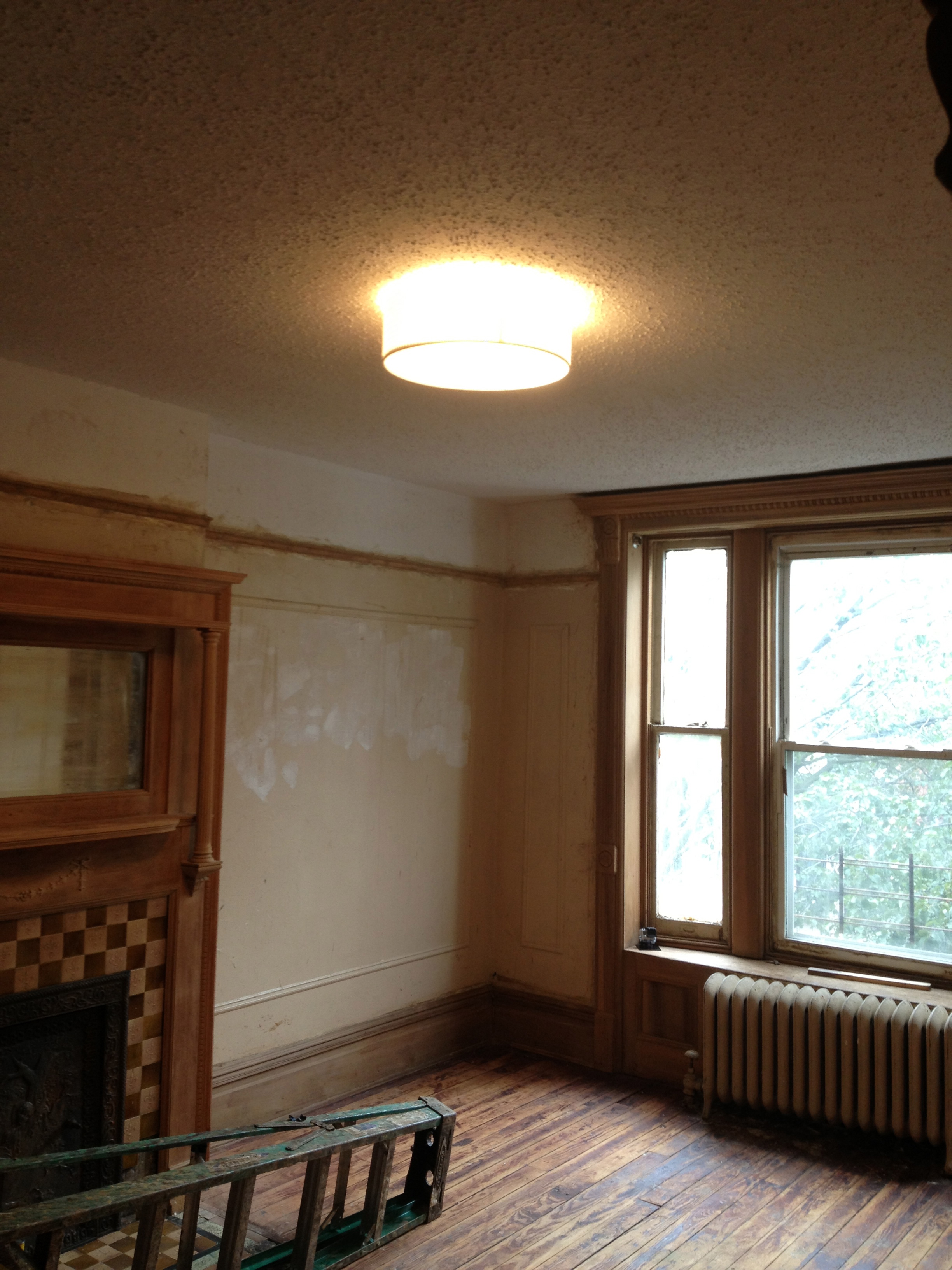
Over labor day weekend, we tore out the bedroom ceiling. A cheap patch job of installing a false dry wall ceiling (and covering it with popcorn) robbed the room of its original height – plus it left us wondering what lurked above it.

Old Ceiling

This is how it used to be (pardon the cell phone photos, but in possibly what was the only case of good judgment here, we did not bring the big camera in with us).

Half gone

Dry wall pulled down, you can see the old ceiling through the 2x4s

Turns out the damaged original ceiling was still up there, minus a big chunk of plaster right in the middle. It was severely bowed towards the center of the room, which is probably why the plaster fell off. There were signs of water damage. Fun!
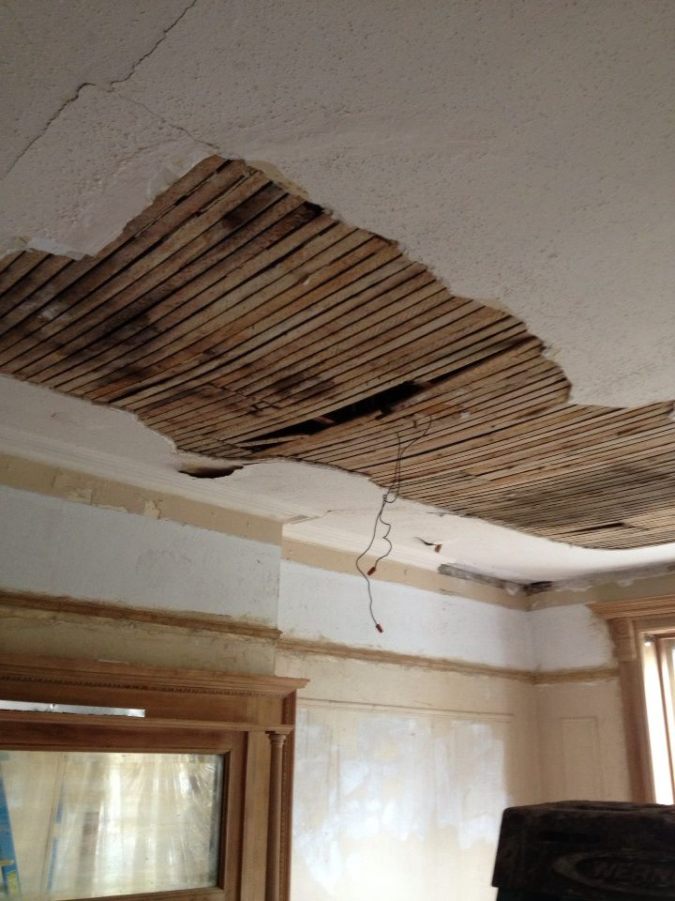
Just a little bit of plaster missing...

Just a little bit of plaster missing… And seriously – what’s up with all the popcorn?

After we removed both ceilings and the original lath, we discovered that the support structure  was compromised: the strips of wood attaching the ceiling to the roof had come lose over the years.

lath

Presented without comment

Open ceiling

Open ceiling, cockloft above.

With the ceiling gone, we had a good look at the space above – more like a crawl space than an attic, it’s called a cock loft (and yes, because I’m totally immature I can’t say it without giggling). It’s kinda interesting to see the structure from above: the sky lights, some strange built-in alcoves. The filth up there is indescribable, the dirt is nearly impossible to wash off the skin. I suppose that’s what 120 years of dust, coal, cigarette smoke, and old fart residue looks like. Absolutely gross.

Dirt

This photo doesn’t fully capture how dirty we were. And by the way, the Facetime camera on the iPhone is absolutely awful!

The space is now ready to be re-built. We saved a piece of the ceiling molding so that we can restore it in the new ceiling. Sadly, most of it was gone so we’ll have to rebuild from scratch.

Moulding chunk

It was a total bummer to have to remove the moulding, but most of it was already gone. What was left did put up a good fight. We will use this chunk as a template for the restoration.

Since all the prep work has been done, you’d think we’d finish it off quickly. That is where you’d be wrong. This past weekend was dedicated to working on the stoop railing and doing a test stripping of the brownstone. Why? Well, winter is coming and it needs to be done. The stoop has been the Hubs pet project during the summer. Amidst finishing grad school, the crazy rains of June and the sweltering temps of July, progress has been slow. Happy to report one whole side has been stripped and coated with primer.

As for the masonry, we’re having a hard time finding someone who will strip/repair the brownstone the in the way we feel it should be done.   So I decided to do some tests and see if I could do it myself.

Cue stripping test #1: Some PeelAway 1, a bit of time, some water and some citric acid later – voila! Brownstone without paint.
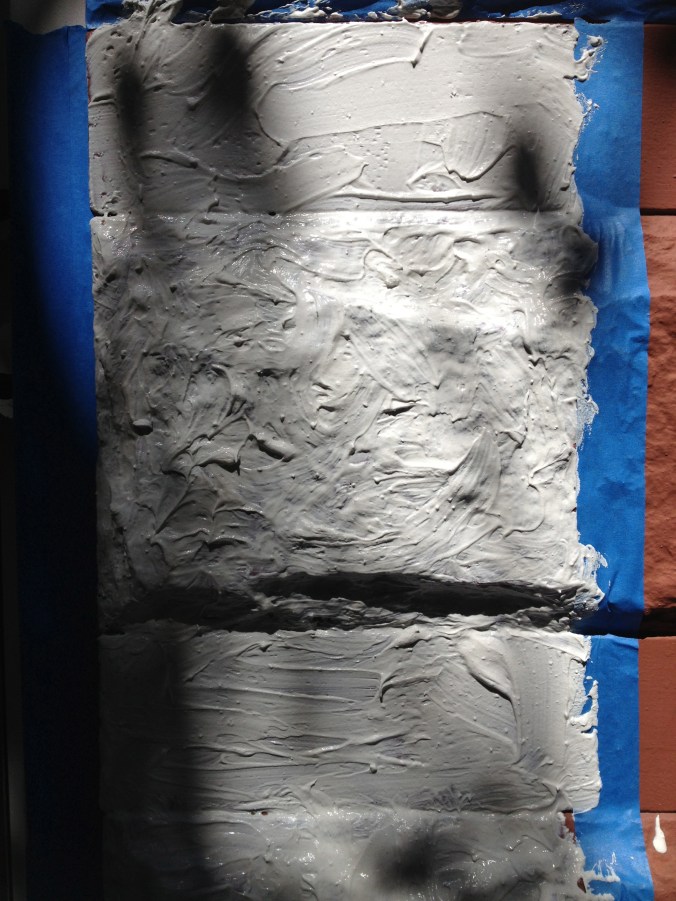
IMG_1454

Step 1: apply layer of PeelAway that is at least 1/8 of an inch think. Kinda like frosting a warm cake. Got a bit melt-y…
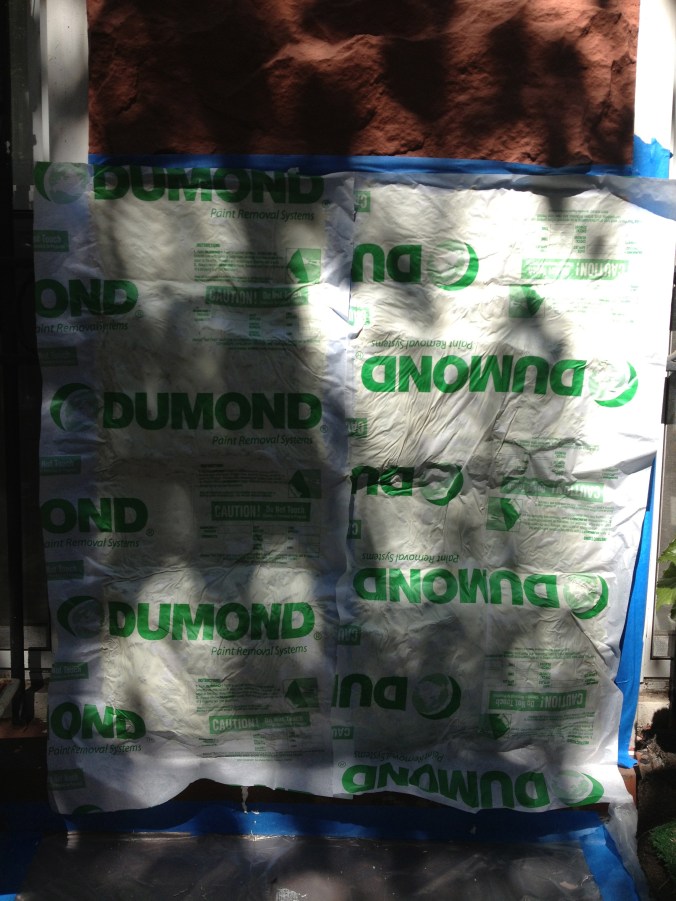
IMG_1456

Step 2: Cover with the nifty paper provided. And wait.

IMG_1462

Step 3: remove the goop and wash. And wash. And wash. Then spritz some citric acid and wash again.

IMG_1474

And there you have it: stone (mostly) free of paint.

My biggest problem is that I’m super afraid of heights and I have no idea how I’ll get to the second and third floors….
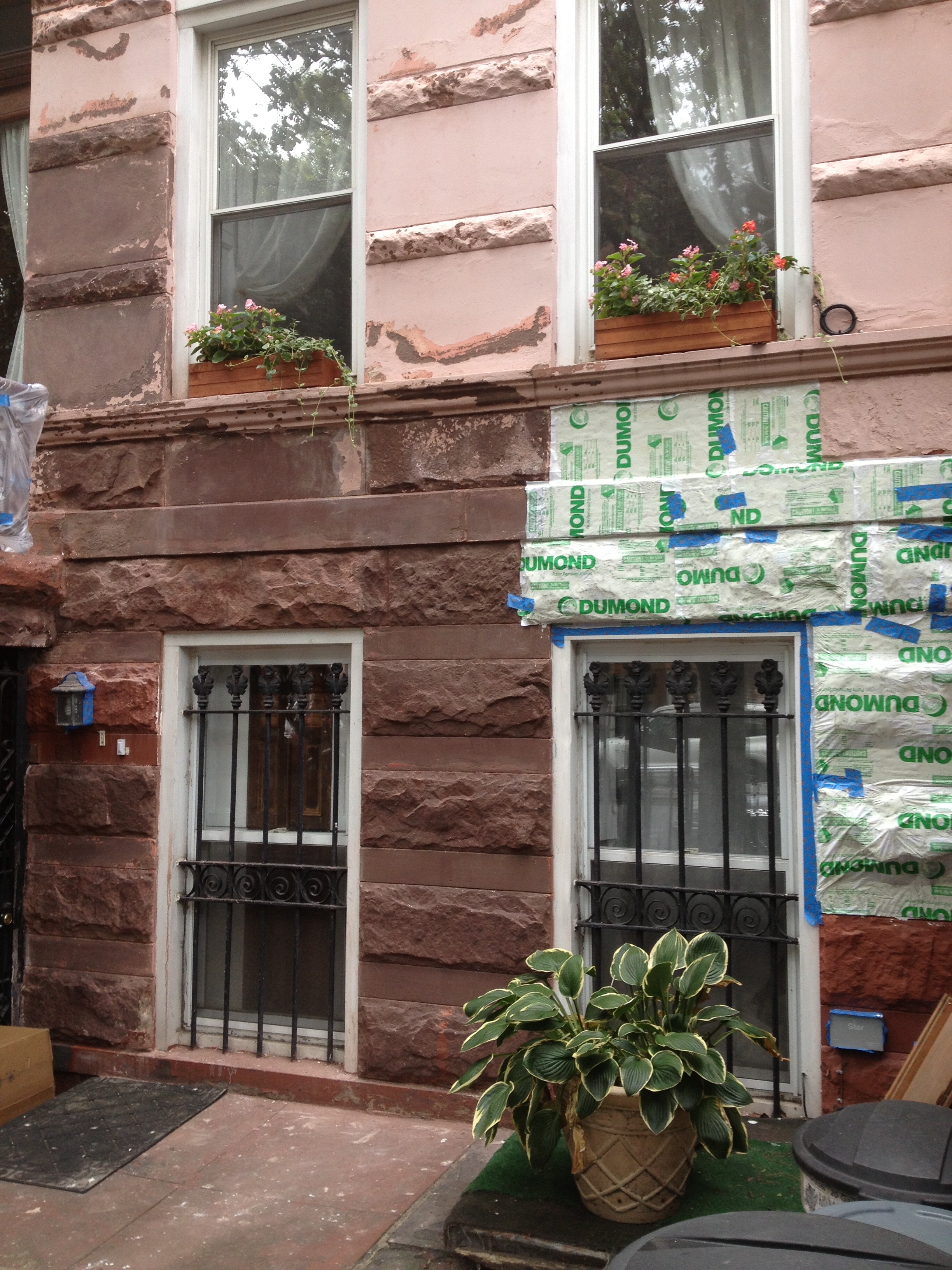
And…. scene!
The paint is off the woodwork in our bedroom. Yey!
Over the course of three days, our amazing paint stripping expert and her helper stripped the fireplace and fireplace cover, the pocket doors and moldings, the window frame and window seat, the base boards, the picture rails, as well as the moldings of the two other doors.

They used 12 gallons of zip strip, 7 gallons of denatured alcohol and a ton of elbow grease. More photos and details on a later post, but suffice to say the woodwork looks wonderful and, to my surprise, looks brand new – which is a bit weird.

Fireplace2

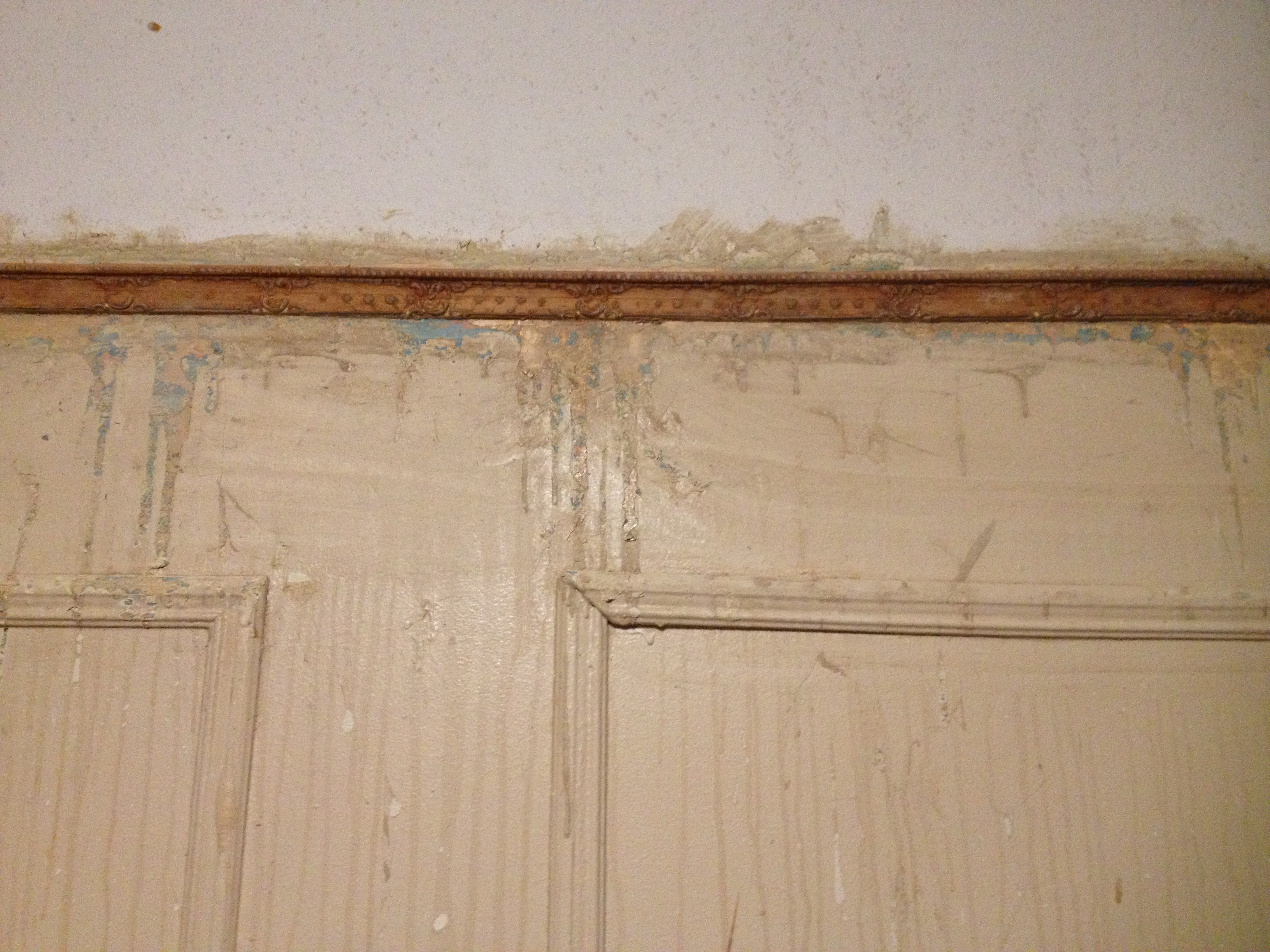
On a less exciting note,  we were left with a lot of goober on the walls. The room looks like an alien crime scene:

gooberNow to the tedious work of fixing the walls so that we can paint.

And then this happened

Sometimes, even the most hard core DIY needs a little professional help. Since we seem to be a bit morose these days when it comes to getting stuff done around here, we decided to treat ourselves to a little help in the paint stripping department.

Check out the results of day 1:

Pocket Doors

Fireplace progress

The initial feeling of being inadequate and unable to get it together to make progress on the house was quickly replaced by “holy crap! That looks awesome!” And with that, I accepted that fact that it’s totally OK to hire someone to help every now and then.

One bold step

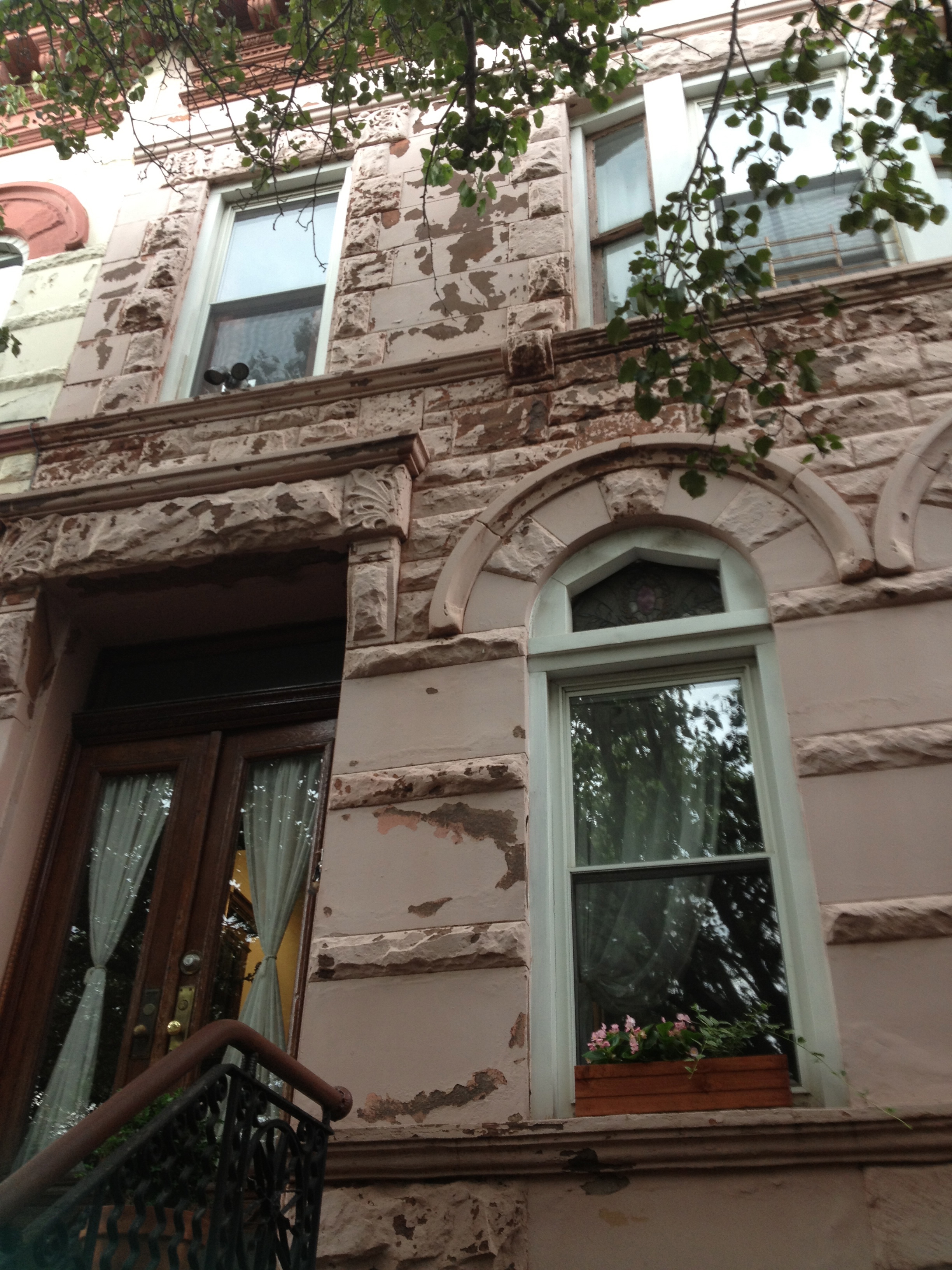
Our brownstone is pink. Well, at the moment it’s mostly pink, as the paint is peeling in large chunks.

IMG_1180

Yep, it’s starting to look really bad. Not only does it look bad, but paint is also bad for the brownstone itself. It traps moisture and causes the stone to basically turn into sand. Not good. Not good at all.

We want to return the façade to its original non-painted stage. As you can tell by the photo above, this task is being helped by the elements.  Living in the sad looking house is starting to make us feel sad. So we decided it’s time to find someone to strip the paint and patch up any damaged spots. Easy right?

Wrong! Contractor #1 seemed to be on the right track, but has yet to provide an estimate (it’s been a month!). Contractor #2 declared the façade strong, but also stated that he will chip it all away and rebuild it with tinted cement, as it won’t withstand power washing. Um – what kind of an idiot would dream of power washing brownstone (which is a form of sandstone)? I mean, duh!

I have been looking at brownstone façades and I can always tell when they have been chipped away and redone, because the material used tends to have a flower-pot quality to it. Sure, sometimes the stone is too far gone and needs to be patched or replaced. But to just start off removing the very thing that makes the house special? No, thank you. Turns out we’re quite protective of our brownstone.

So what to do? Would it be crazy to tackle this ourselves? The pink latex paint is coming off is big pieces. How hard can this possibly be? Somehow I have a feeling I’m abut to find out.


Ironwork

I’m told that our neighborhood boasts some of the largest collection of original ironwork in all of Brooklyn. Rows upon rows of ornate stoop railings in block after block of brownstone homes.

As is the case with pretty much every surface of our house, our railings are caked up with paint and they are peeling. Water is the arch nemesis of ironwork, so it’s super important that the paint be in good condition to prevent rusting.

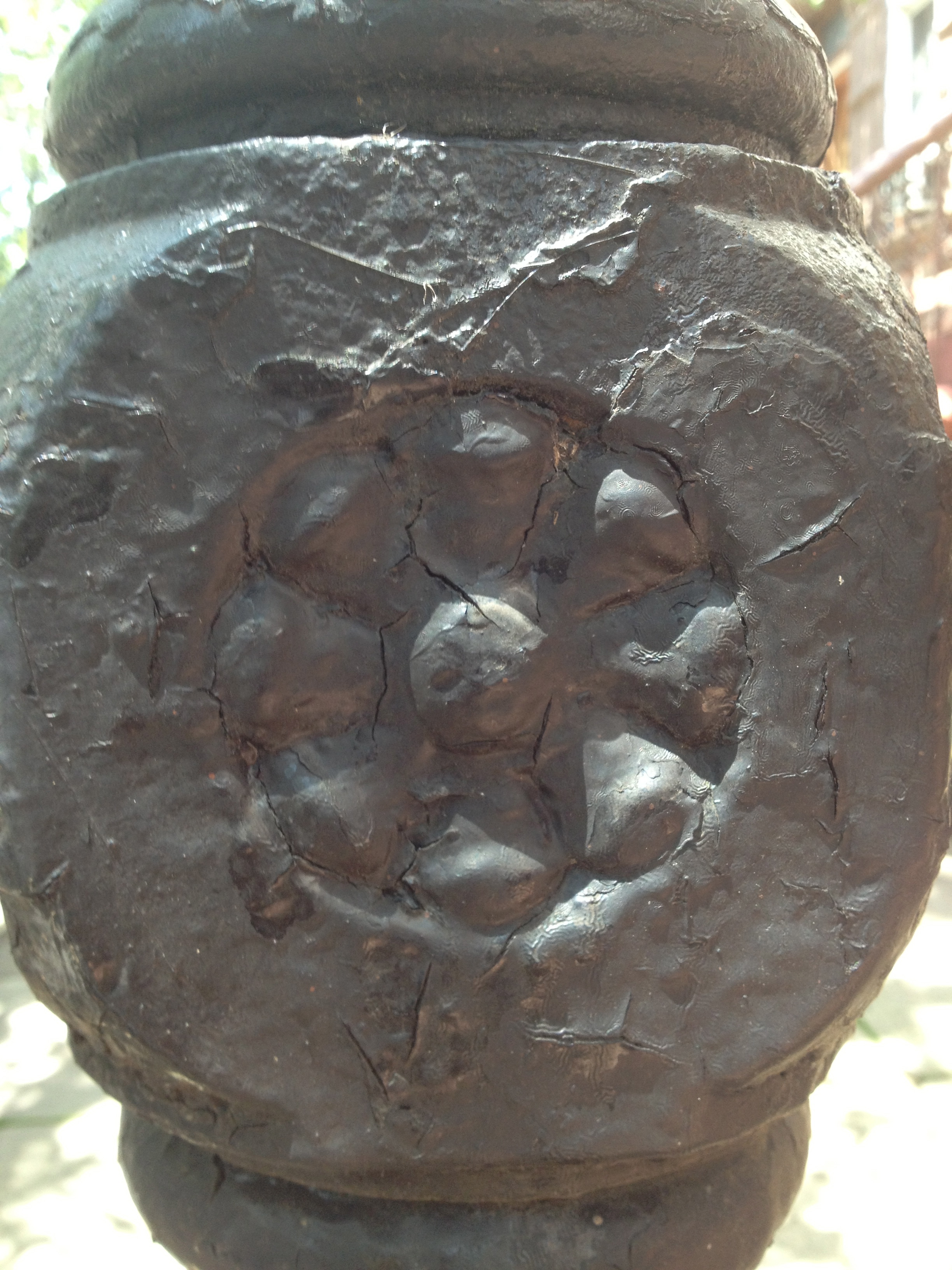
Our newel posts looked like this:

IMG_1112

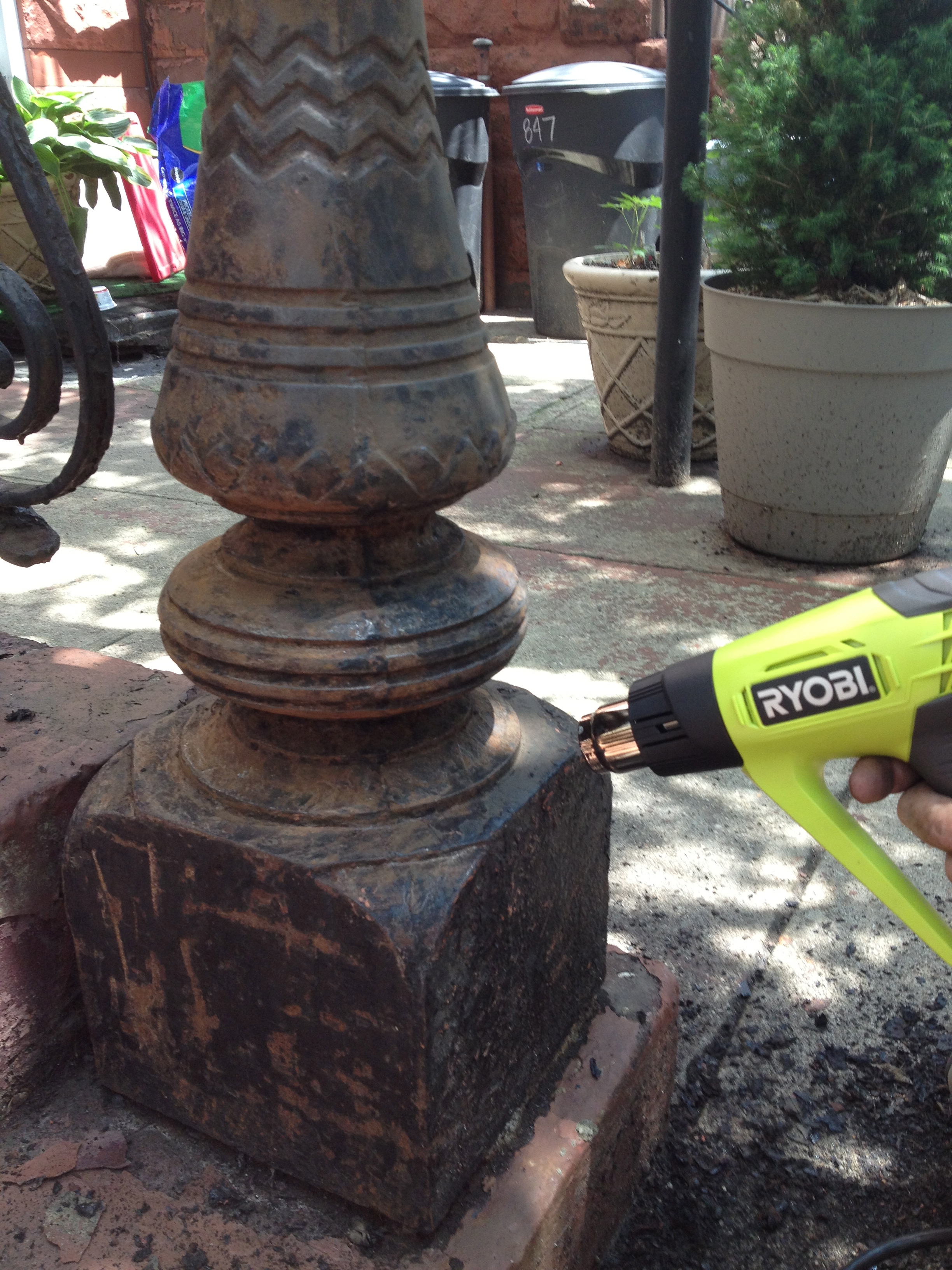
Gross, right? The first we* attacked it with our trusty PeelAway 6. It worked OK, but since we were working outside we decided to give harsher chemicals a try (Zip Strip). It worked OK, too – but not that much better. Because the third time is the charm, we tried a heat gun. Our previous concerns of scorching woodwork didn’t apply here, so we went to town:

IMG_1114

Worked pretty well. It was great to see all that detail that had been lost under the gobs of paint.  Here is the after shot with a coat of primer:

IMG_1118

There is still a long way to go to get all of our railing stripped. The newel post itself took about 2 days. The weather has been making progress slower – all this rain makes it difficult to camp outside for any length of time.

* by we I really mean the Hubs. I had nothing to do with this project, other than the occasional cheerleading.

Yes, we’re still here…


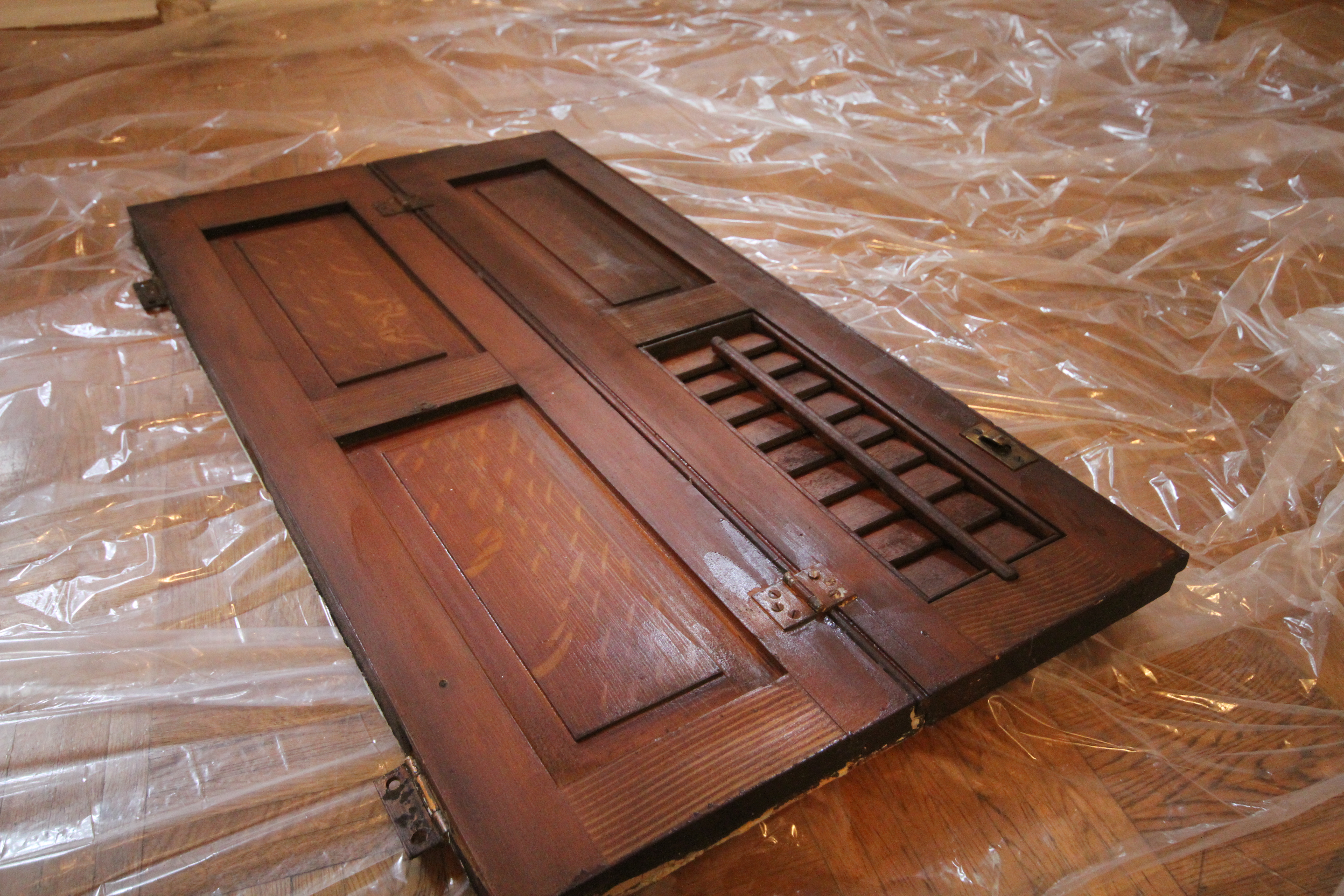
It has been a while since the last post. As with any reno project, sometimes life gets in the way. We’ve been tackling smaller projects that we can start and stop as needed. For example, we’ve been stripping our shutters, which is easy – yet incredibly time consuming. Most of our front windows have shutters, all of which are painted in and caked with many layers of paint and goop. At 8 panels per window x 5 windows, there are a lot of shutters in need of some love…

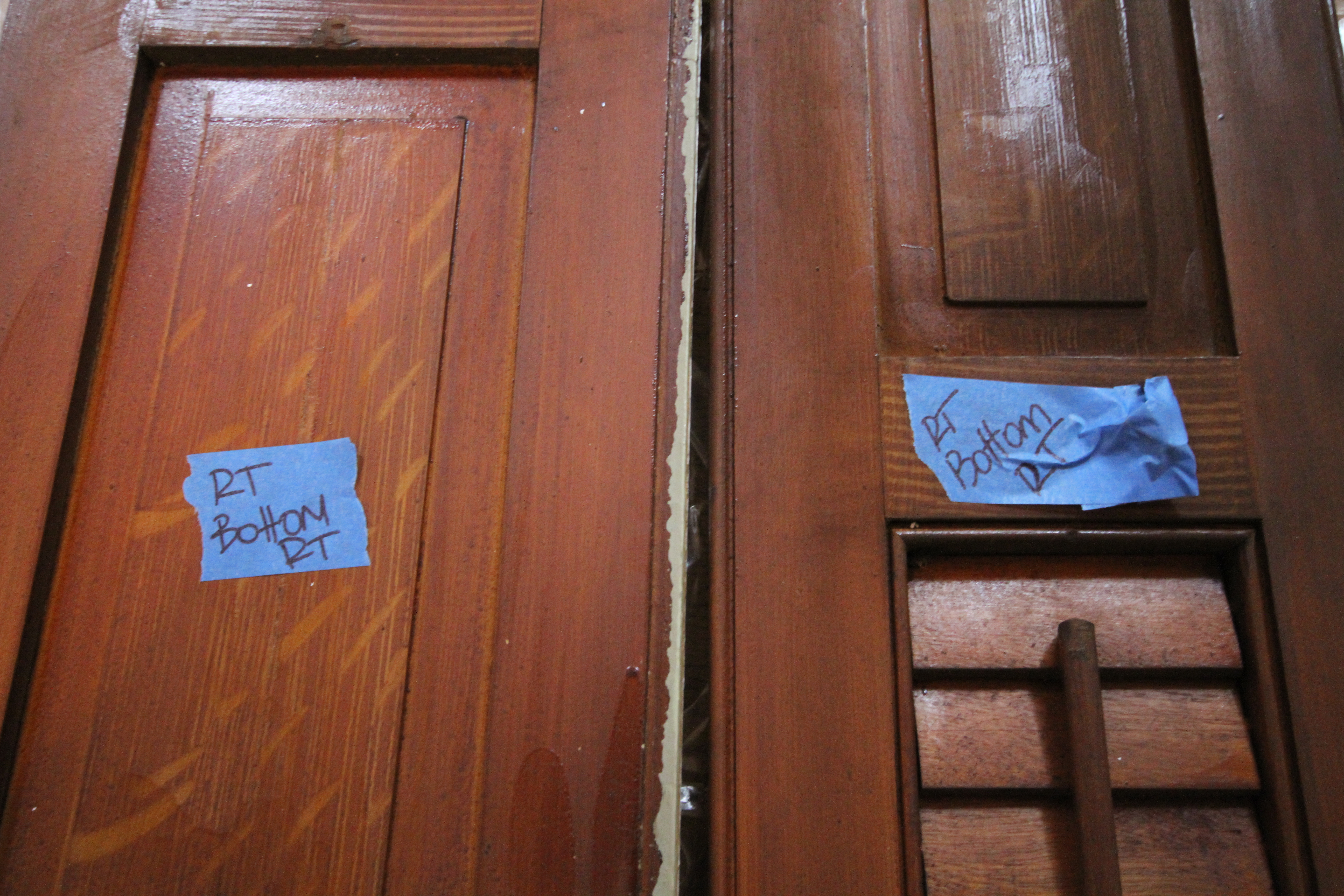
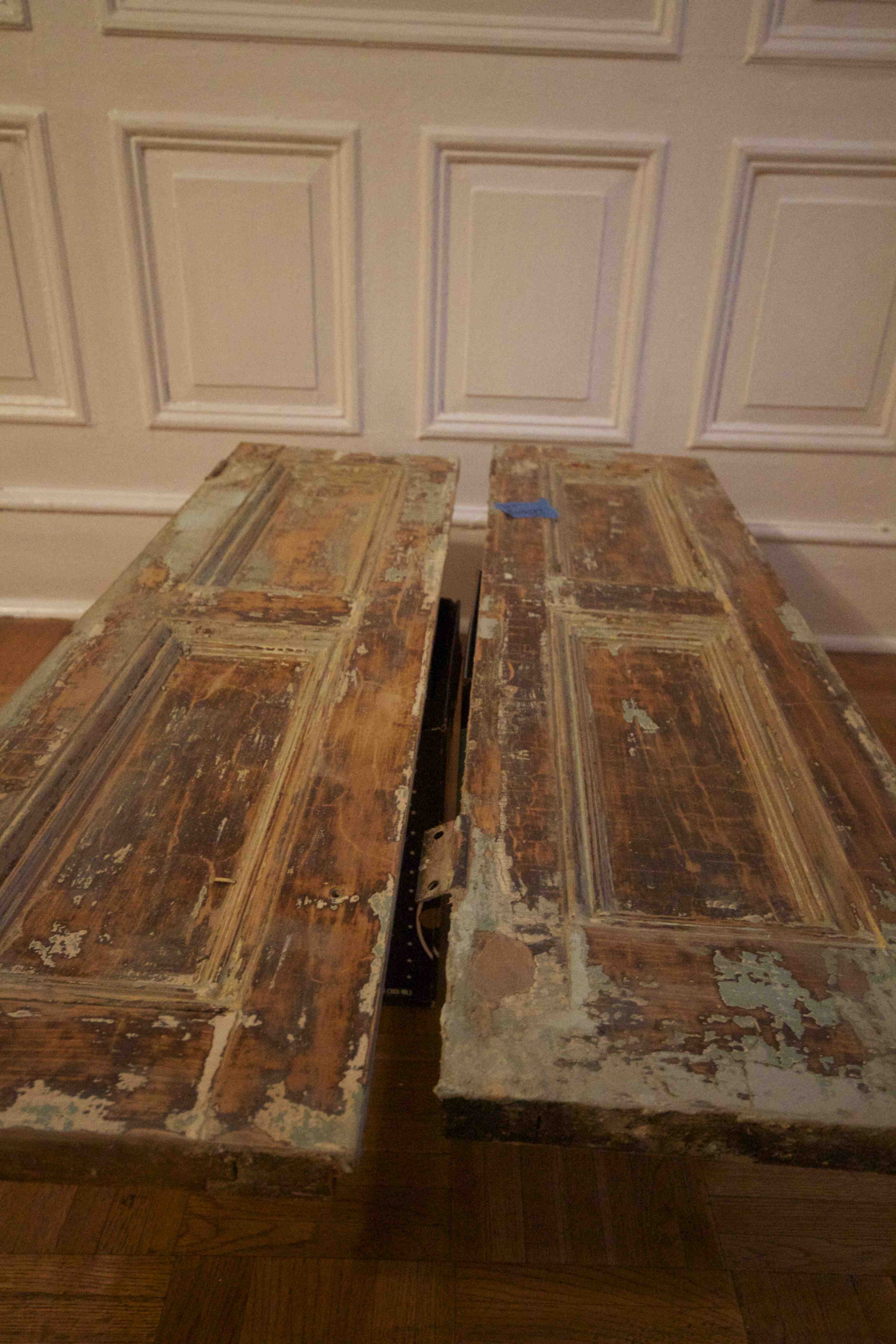
First we removed the shutters and labeled them so that they can go back in the correct location. They are probably interchangeable, but didn’t want to risk it.


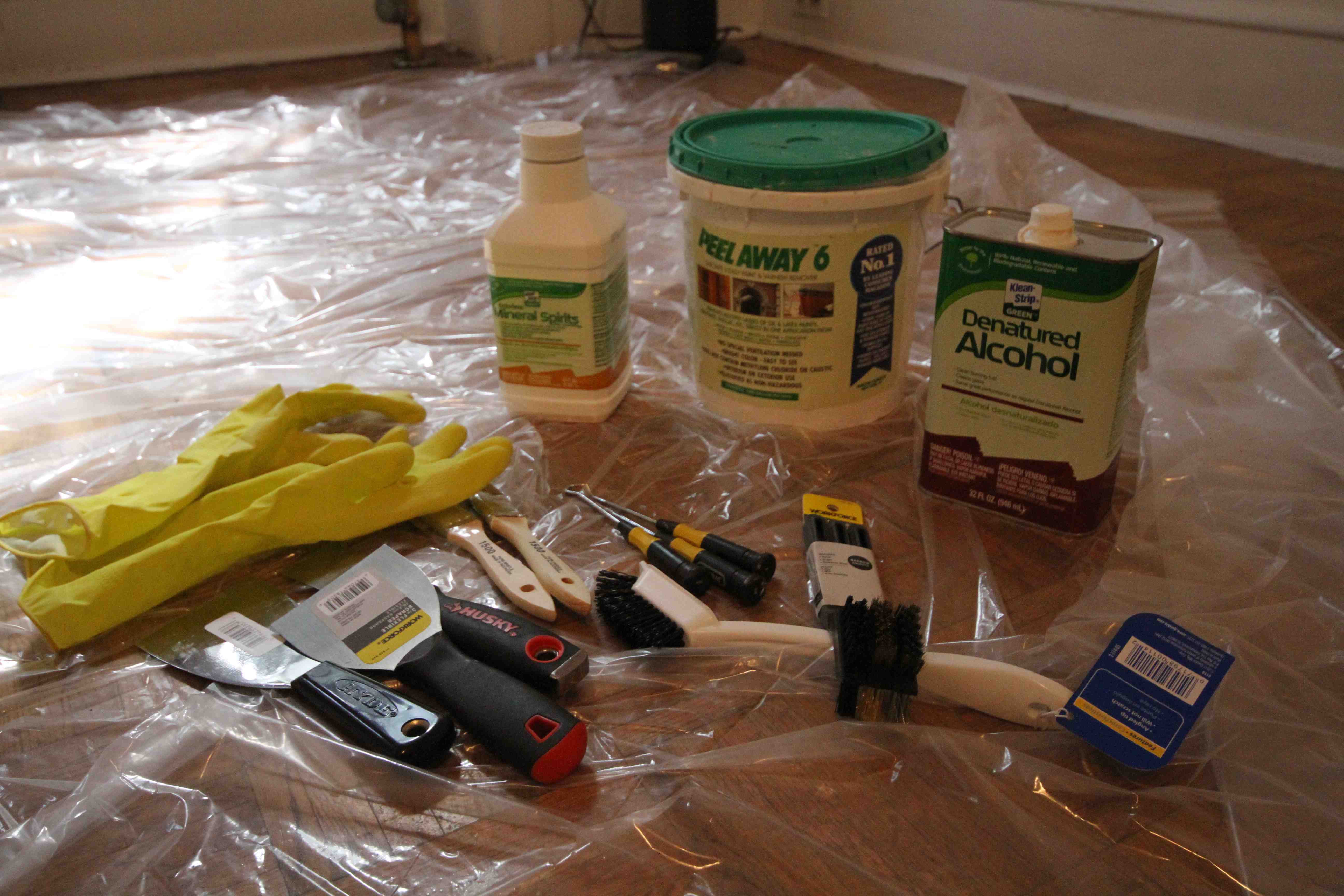
Cue the tools: PeelAway6, Mineral Spirits, Denatured Alcohol and a variety of scrapers, brushes and small metal tools that will help get paint off the small crevasses. And gloves. You’ll need many pairs of gloves, as they quickly get sticky and unusable.


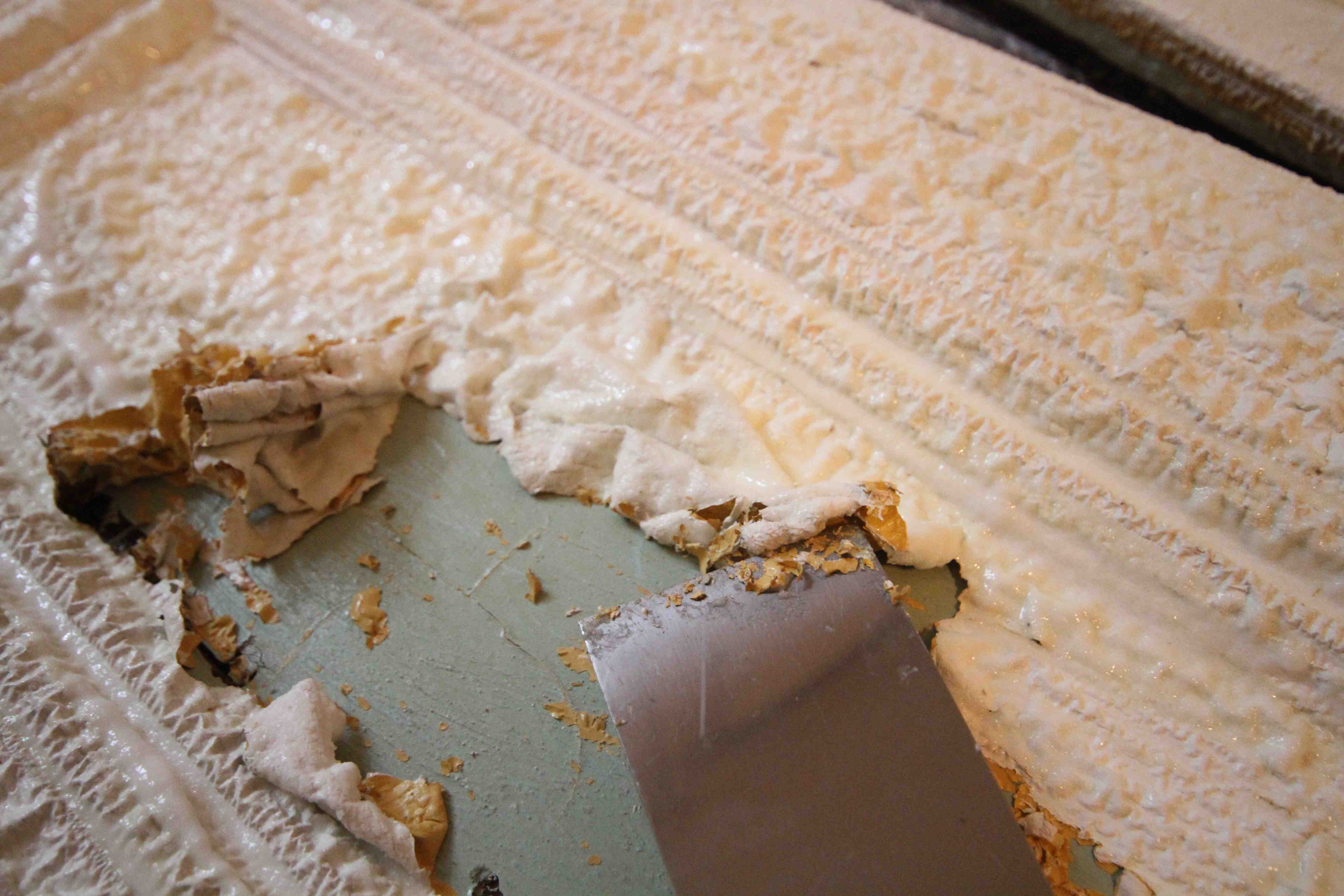
The next step is to apply a generous layer of PeelAway6. I have tried all the other non-toxic products and PeelAway6 seems to work the best. It’s a bit hard to find these days, as Home Depot doesn’t seem to carry it anymore.  As the chemicals react with the paint, you’ll see some bubbling. The shutter on the left is almost ready to peel, while the one on the right still has some time to go.


Once the surface is nice and blistered, use a scraping tool to peel off the paint. In this case, there is an almost intact layer of paint below, which will require a second application.


Using the scraping tool and a hard bristle brush with mineral spirits, you’ll eventually get to something like this: the first few layers of paint cleared up, ready for a second application of paint stripper.


Cue the PeelAway6 again:


After three applications of paint stripper, the shutters look like this – it’s one of those “it will get worse before it gets better.” At this stage I find it’s actually more effective to use denatured alcohol to remove the last stubborn bits of paint. For bigger clumps, however, another application of paint stripper may be needed.


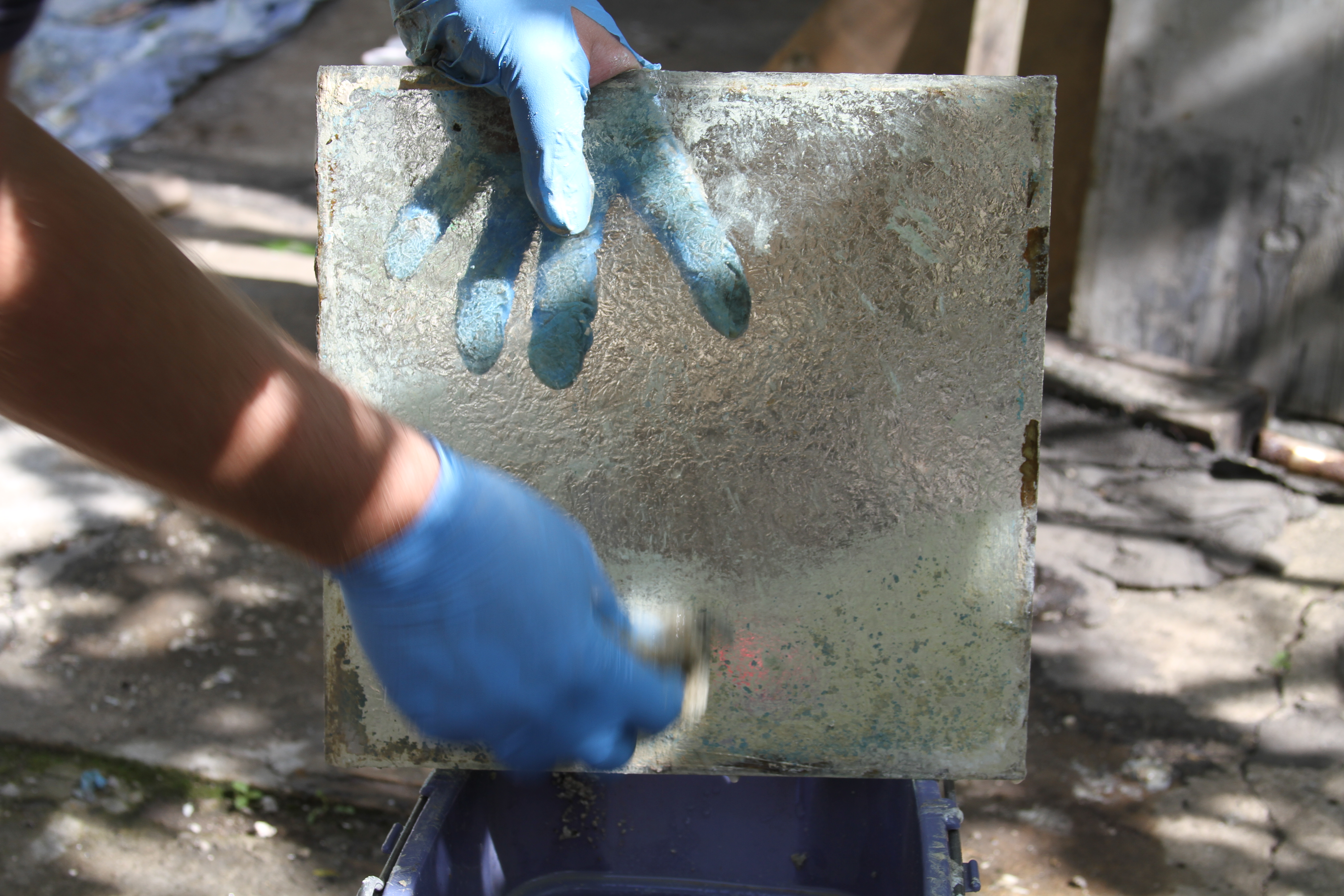
The back sides of the shutters (the side that is visible only when the shutters are open, was covered in old varnish. The finish has deteriorated over the years, becoming sticky and splotchy. Luckily, varnish is super easy to remove. Apply a bit of denatured alcohol with an old brush and wipe clean with a rag.


Here is my disclaimer: If you tackle any projects that involve old paint,you have to be aware of lead paint. When in doubt, assume it’s lead paint and don’t anger it –  meaning if the paint is in good condition, it’s safe as is and you can just paint over it. You can have paint chips professionally tested to determine whether it’s lead or not. I find that the do-it-yourself kits available at the hardware store are hard to use and the results seem to be inconclusive (at least the ones I tried). You should never ever (ever!) sand anything that contains lead paint, as it’s super bad if it gets airborne. Little bits and flakes of lead paint are also dangerous, particularly to kids.

Gooped up skylight

Our house has two skylights (in various states of disrepair). The main one, above the stairs to the top floor is made of simple stained glass (which is cracked and needs to be fixed at some point). The second one is in the middle room. When we bought the house, the skylight looked like this:

Yes, not only is the skylight painted over, it is also covered with popcorn. Whomever did this is  an over-achiever of doing dumb thing to functional architectural features. Pay no attention to the ugly lighting fixture. We’ll deal with it later. First, let’s let some sunlight into this room, since it’s a center room without windows.

We took down the skylight window. Once in broad daylight, it was even filthier than we thought.

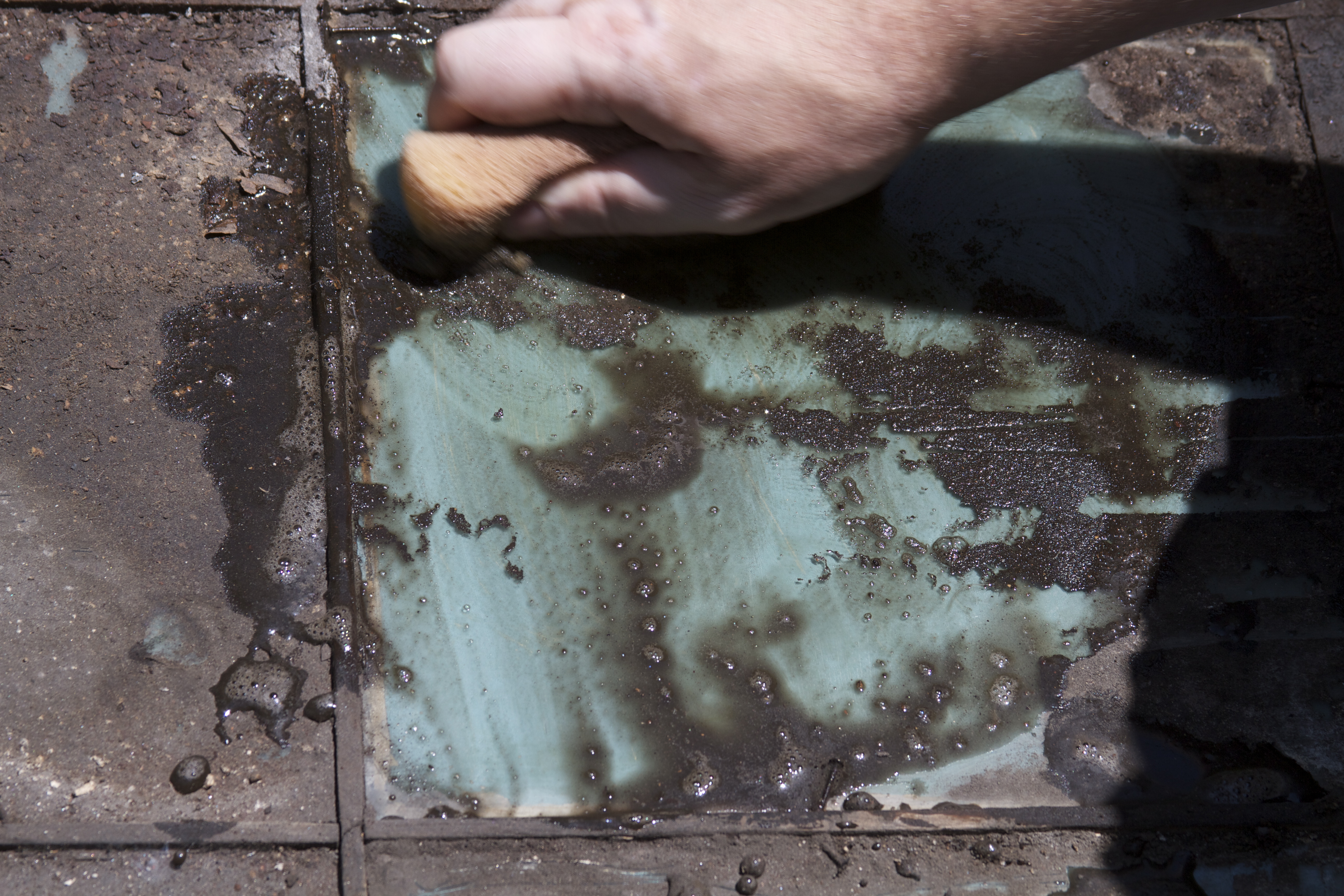
Step 1: Clean the years of accumulated dirt from the roof-facing side of the window

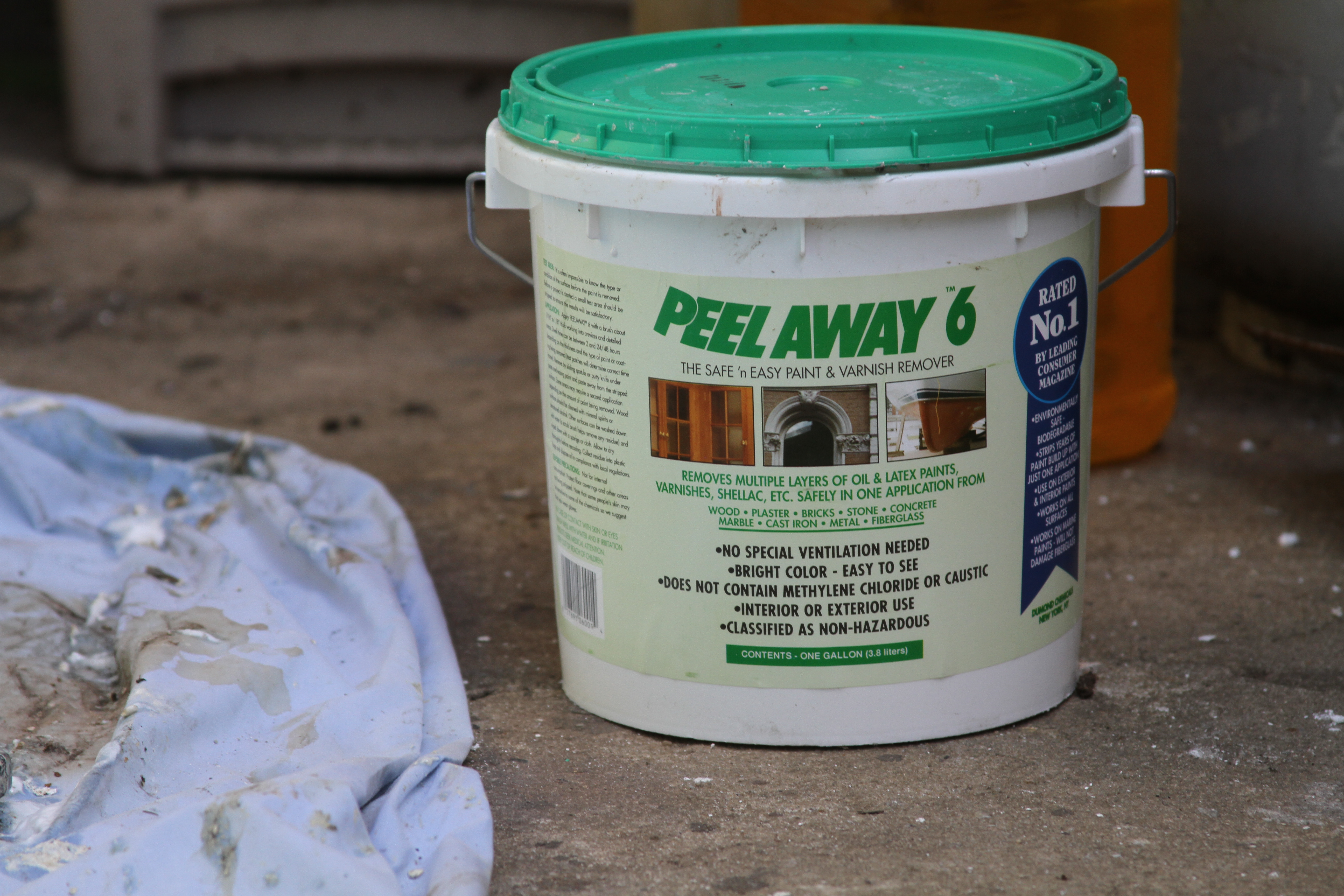
Cue the Peel Away 6. While it works pretty well, particularly for a product that is no-toxic, be prepared to do more than one application, particularly if you have many layers of paint. I have lost count as to how many buckets of this stuff we’ve used thus far.

In the process of removing the glass, the frame kinda sorta came apart…

It was fixed with hardware on the roof facing side. While not perfect, it’s a vast improvement: the semi-finished project probably needs one more round of cleaning to eliminate the smudging. After that, we shall tackle that horrendous popcorn….

Better than a Virgin Mary on toast

There has been an awful lot of paint stripping here at the Pink Lady. It’s a slow process, more or less like picking at a giant never ending scab. Good thing that I am a closeted scab picker.

Anyway, sometimes after staring at paint in its various stages of un-painting, shapes begin to appear. This is by far my favorite one:

Charlie Chaplin with rabbit ears

It’s on the window of the bathroom air shaft. We’re working on peeling back the years of paint to let in some light in. I almost feel bad for making Charlie go away.

Honorable mention goes to this one, which appeared on the mantel of the top floor fireplace:

Dog sniffing another dog’s butt

(the paint is basically just flaking off. The dark brown spots are  the remains of the old varnish. Seems like it reacted with the paint and became very wrinkly. A bit of elbow grease with some steel wool makes it all go away. For the more intricate parts I’ve been using Peel Away 7, mineral spirits and extra doses of patience. A more detailed post on the stripping of the fire place mantel coming soon).